Montessori Primary Program

Pre-K & Kindergarten

Students ages 3-6 years


Welcome To Our Primary Classrooms

We are so glad you are considering the Montessori Country Day School as the trusted, nurturing place for your child's educational journey. We truly understand the importance of finding the right school fit for your child and we are committed to helping you decide if our Montessori Primary Program and curriculum are the right choice for your child and family. 

We Offer Half Day and Full Day Primary/Pre-K Programs

Primary Daily Overview

MCDS offers a full day and half day Primary, Pre-K, and Kindergarten program from 8:15 am- 2:15 pm. Parents may add on Early Bird care and After School care separately. Early bird care begins at 7:30am, but parents may drop off anytime between 7:30-8:10am. After school care begins at 2:15pm and ends at 5:30pm. 

Full Day Program

Half Day Program

After School Offerings

MCDS is offering Soccer Shots, Dance, Mad Science, & Odyssey of the Mind!

Daily Primary Routine

Take a dive into our Primary student daily routine

Morning Routine

Daily student drop off begins at 8:15 am. Students are greeted by teachers and then begin their individual work period. Individual work period is followed by snack, outdoor exploration and then circle time.

Mid-day Routine

After group circle time, students begin lunchtime preparations, they have lunch and clean-up, and then have independent reading time.

Afternoon Routine

Next, the students have co-curricular or specials class followed by their second work cycle. After completion of second work cycle, teacher holds circle time before dismissal.
IMG_0886 3IMG_0620

MCDS Montessori Primary Curriculum

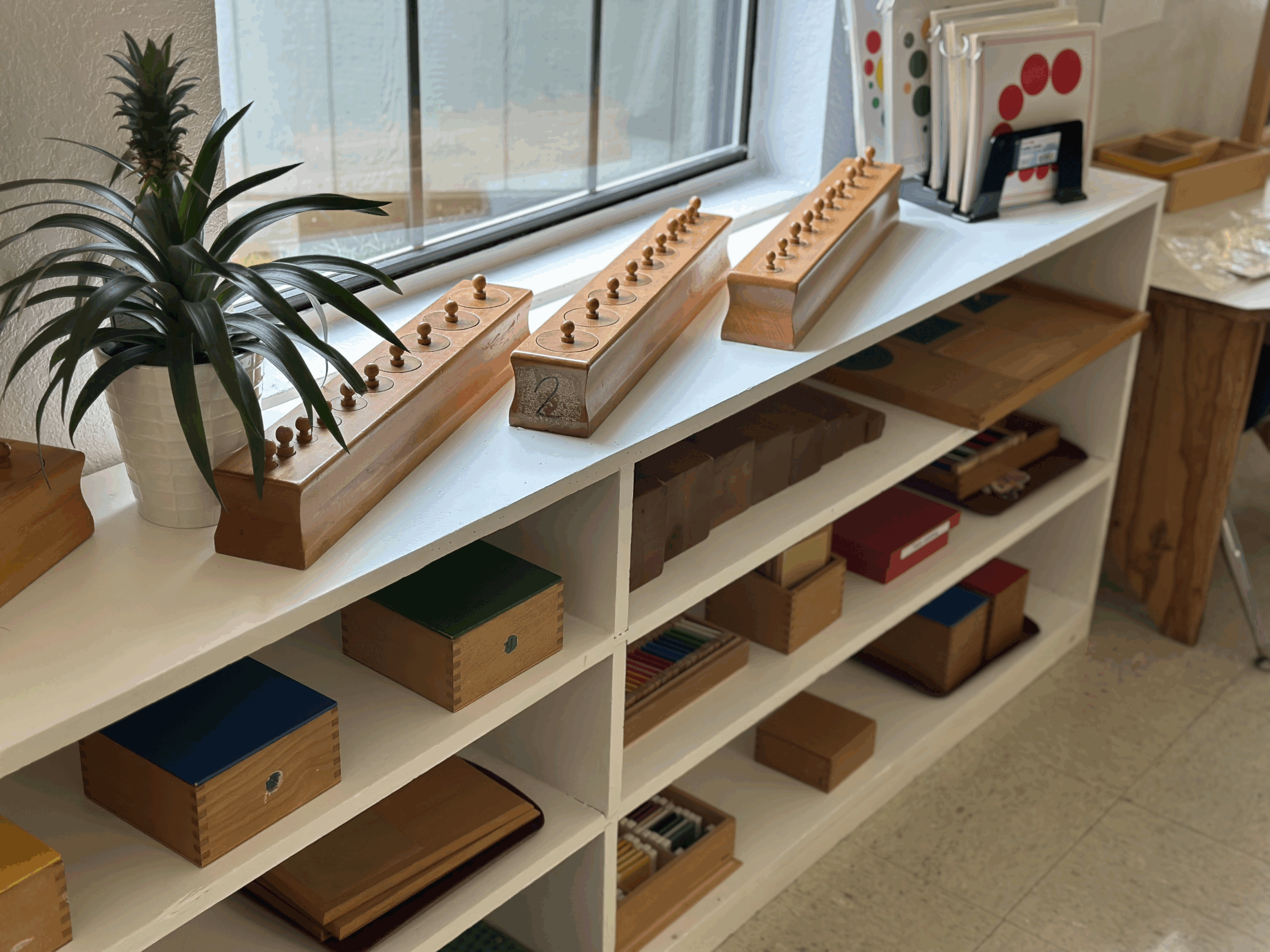
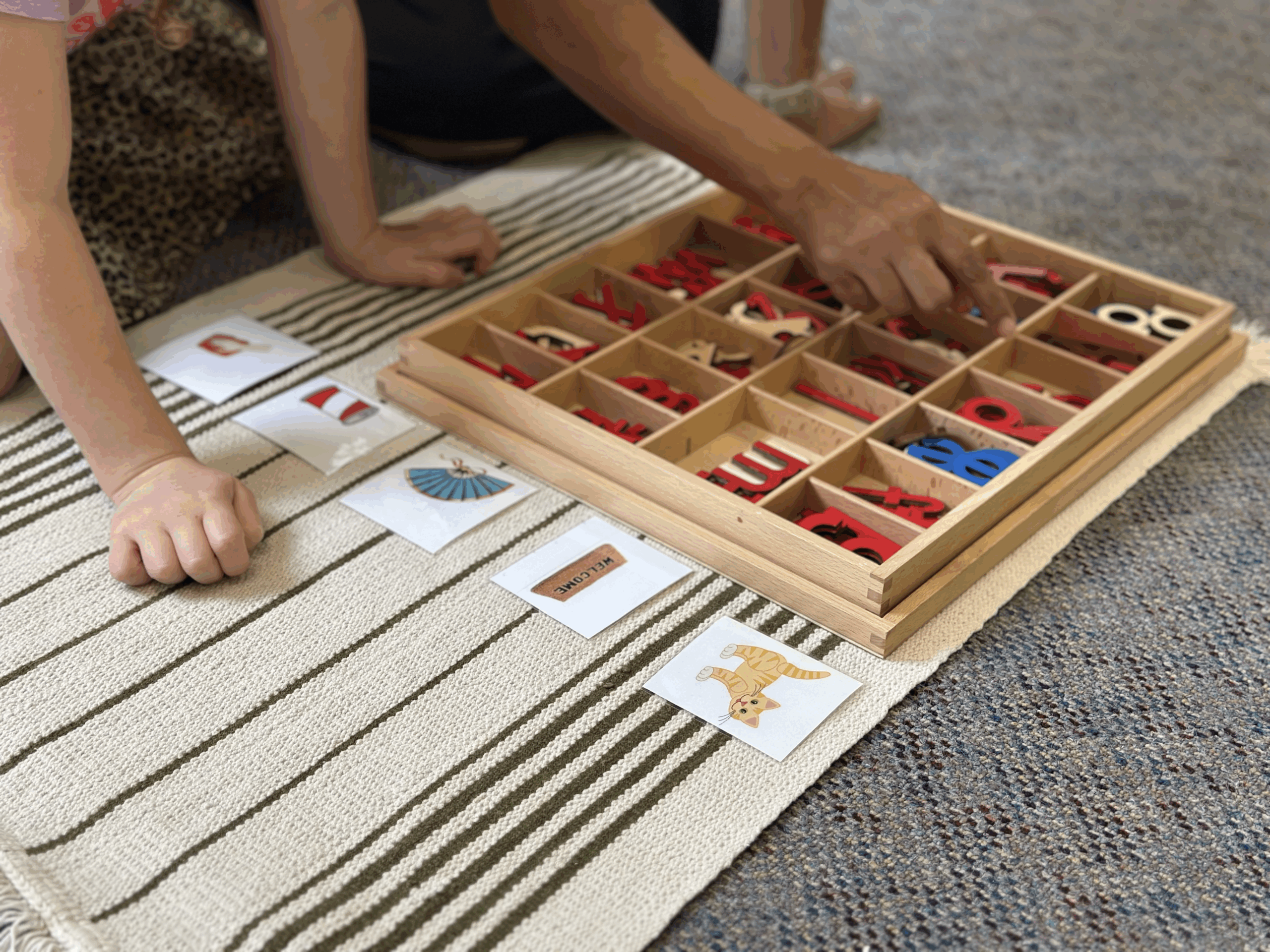
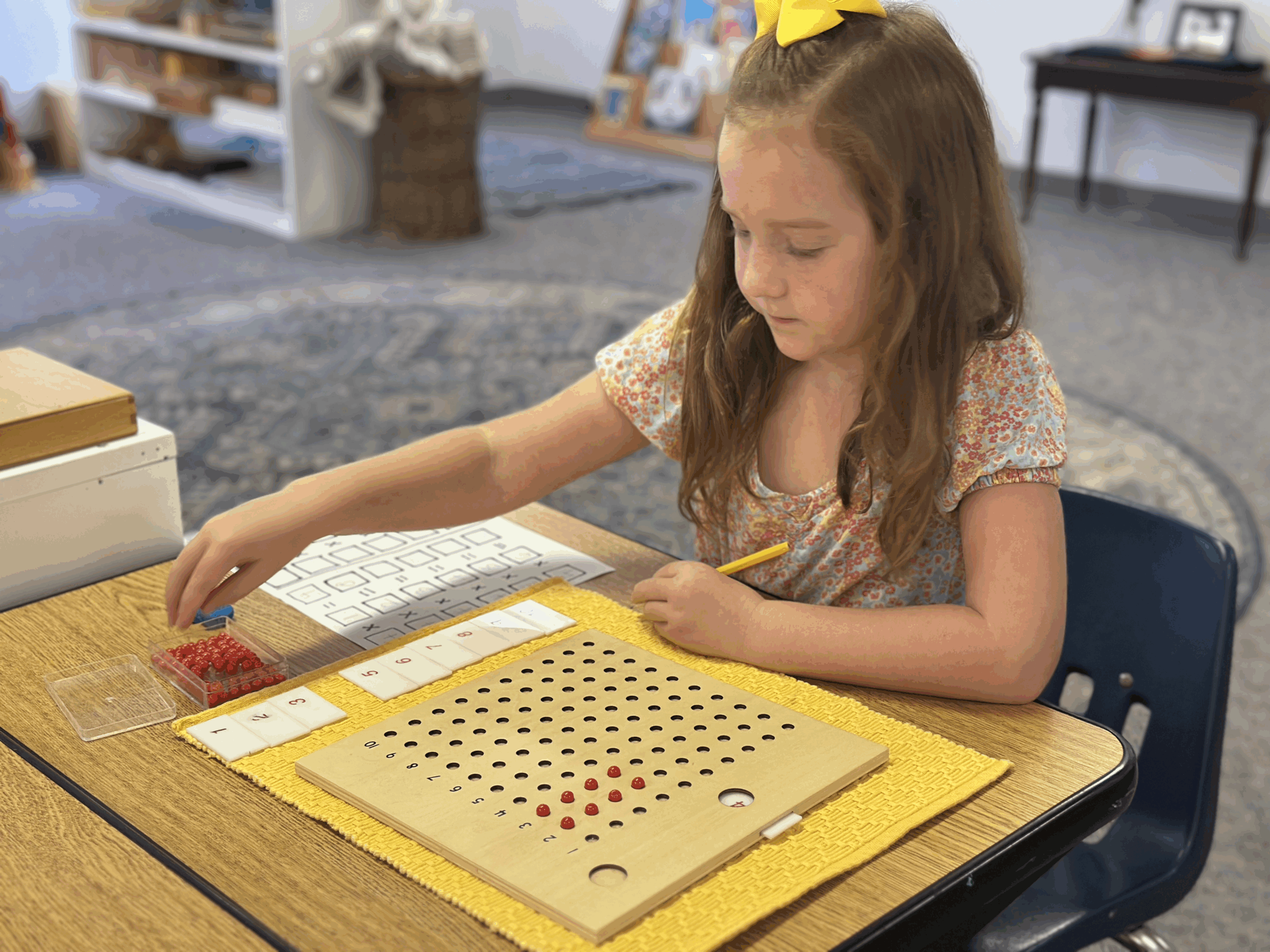
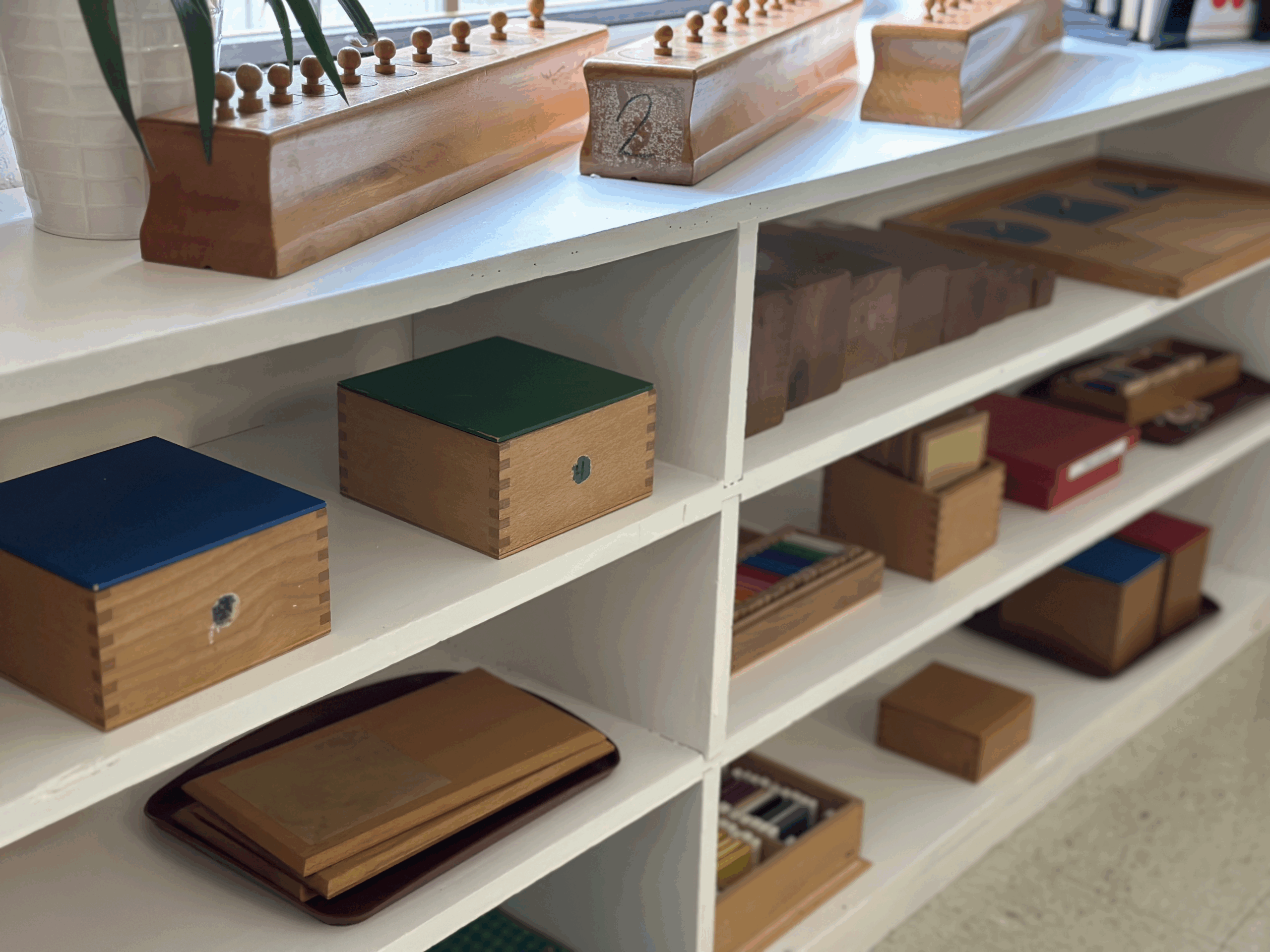
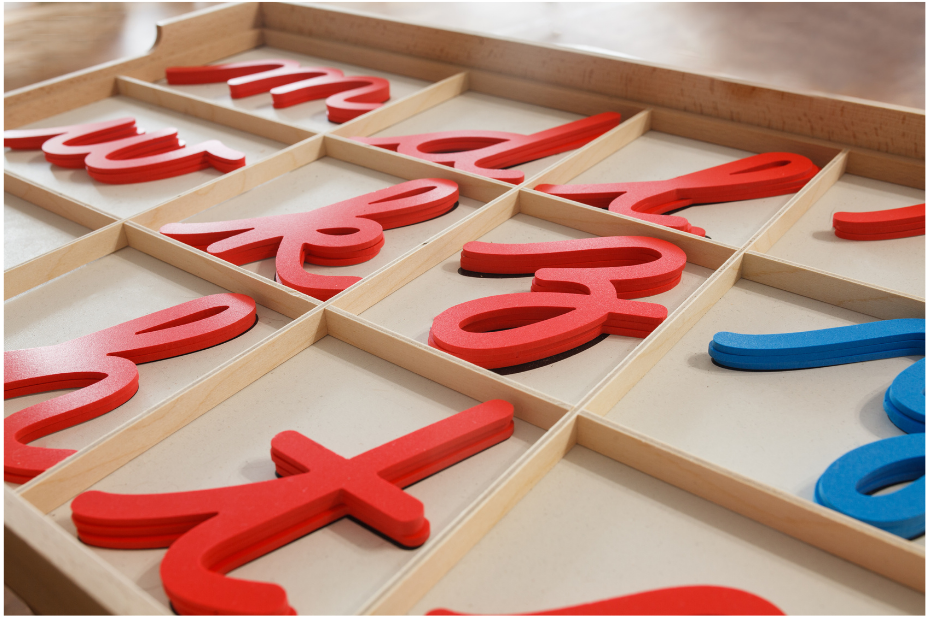
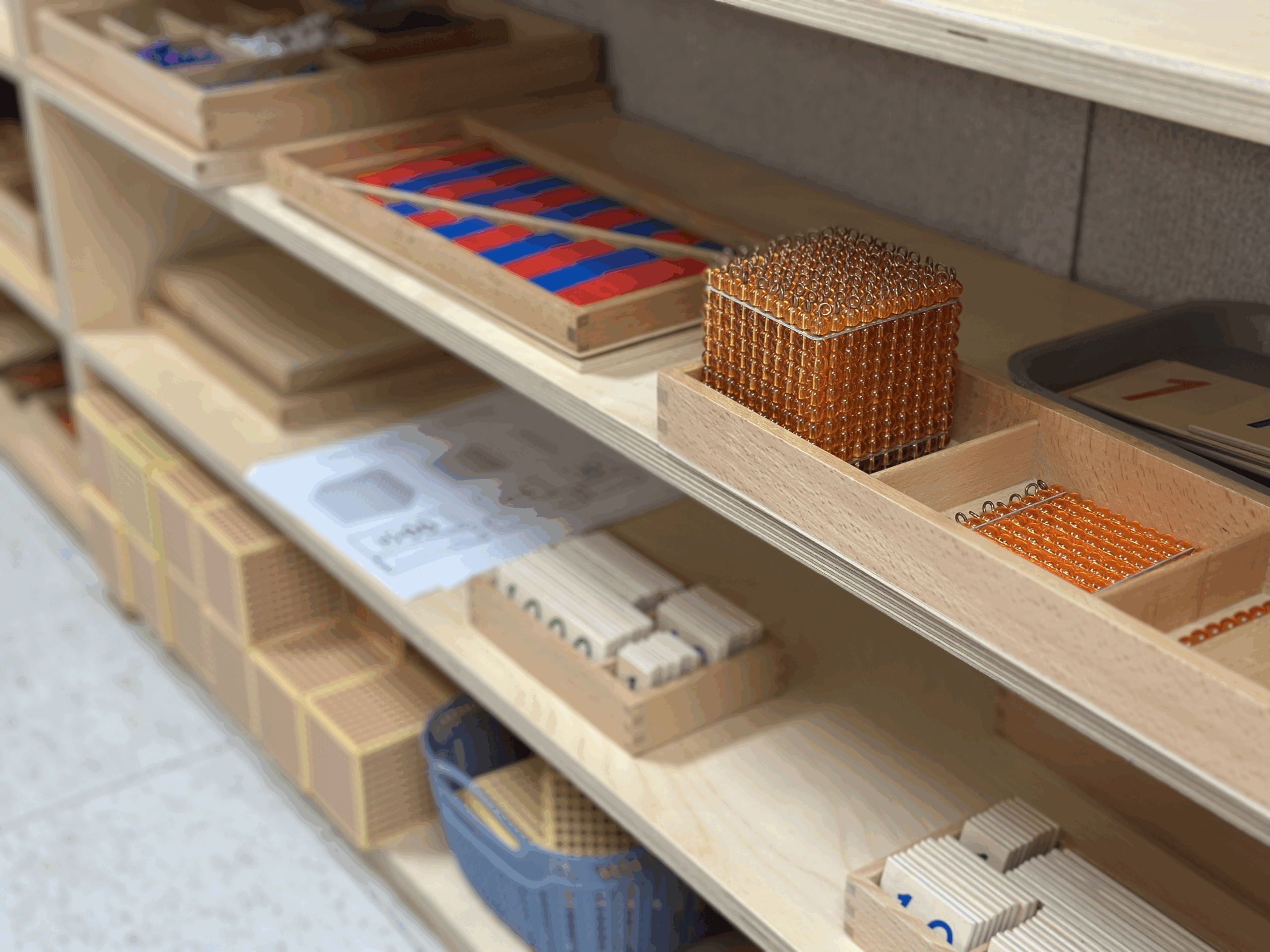
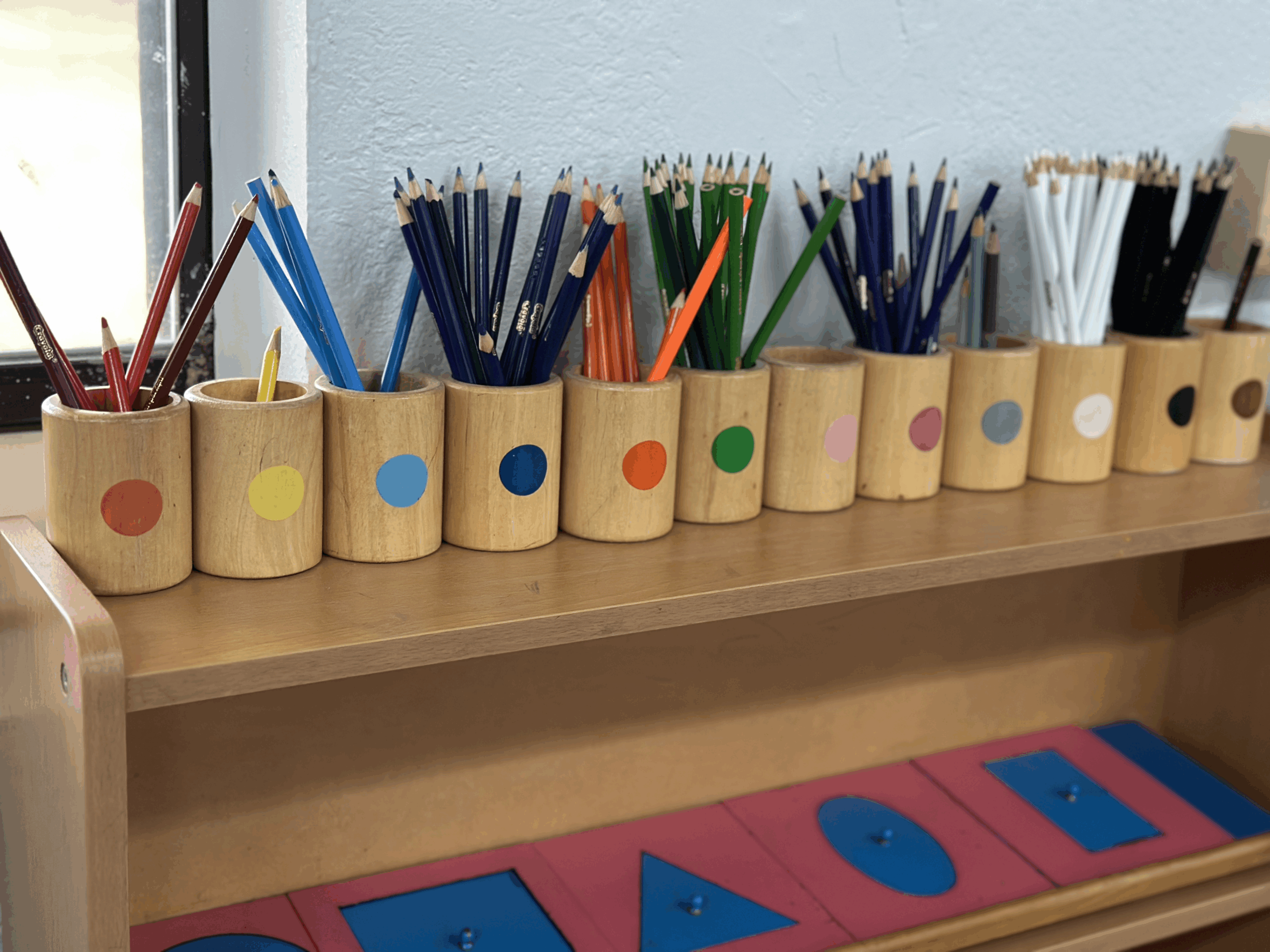
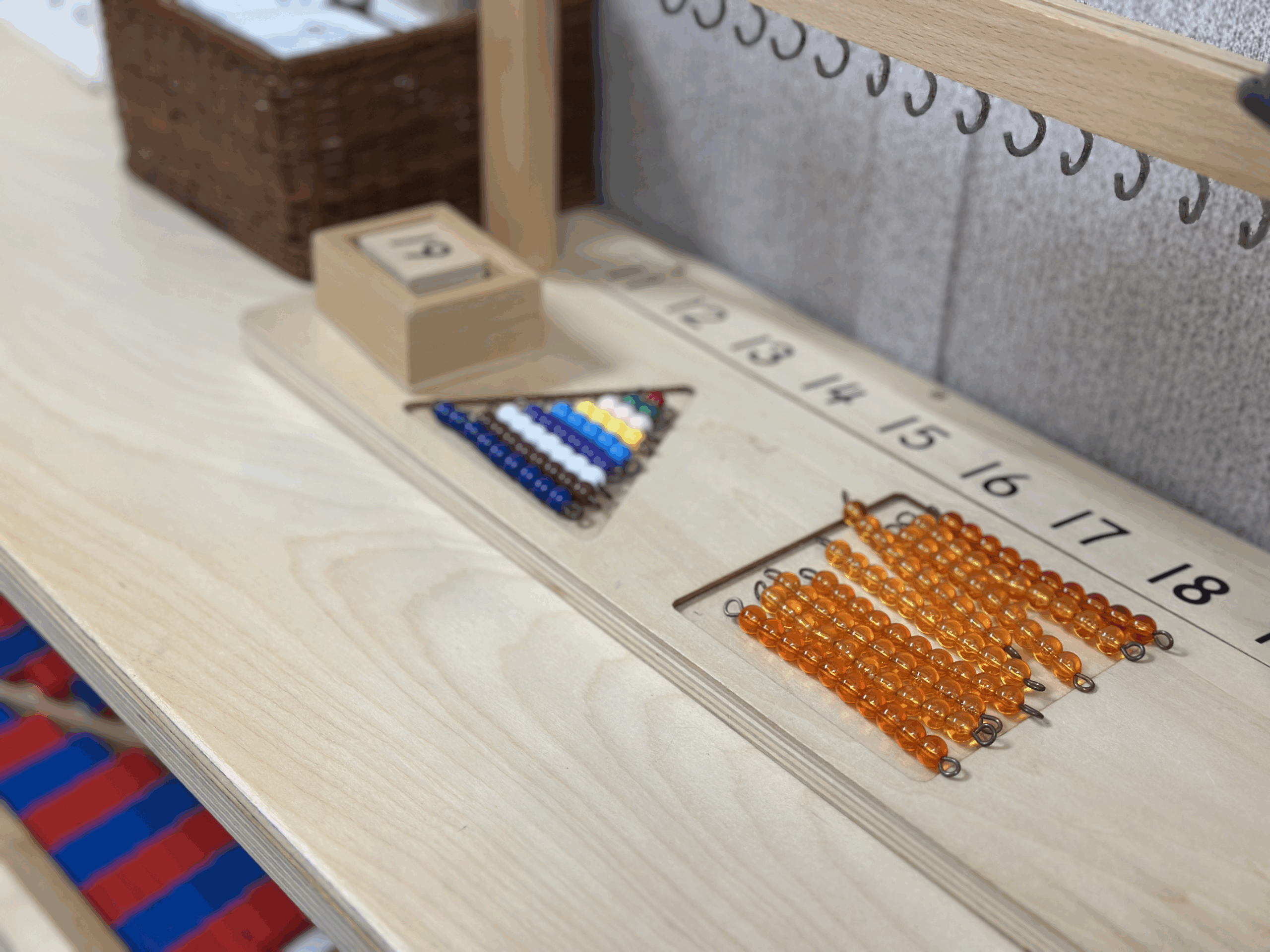
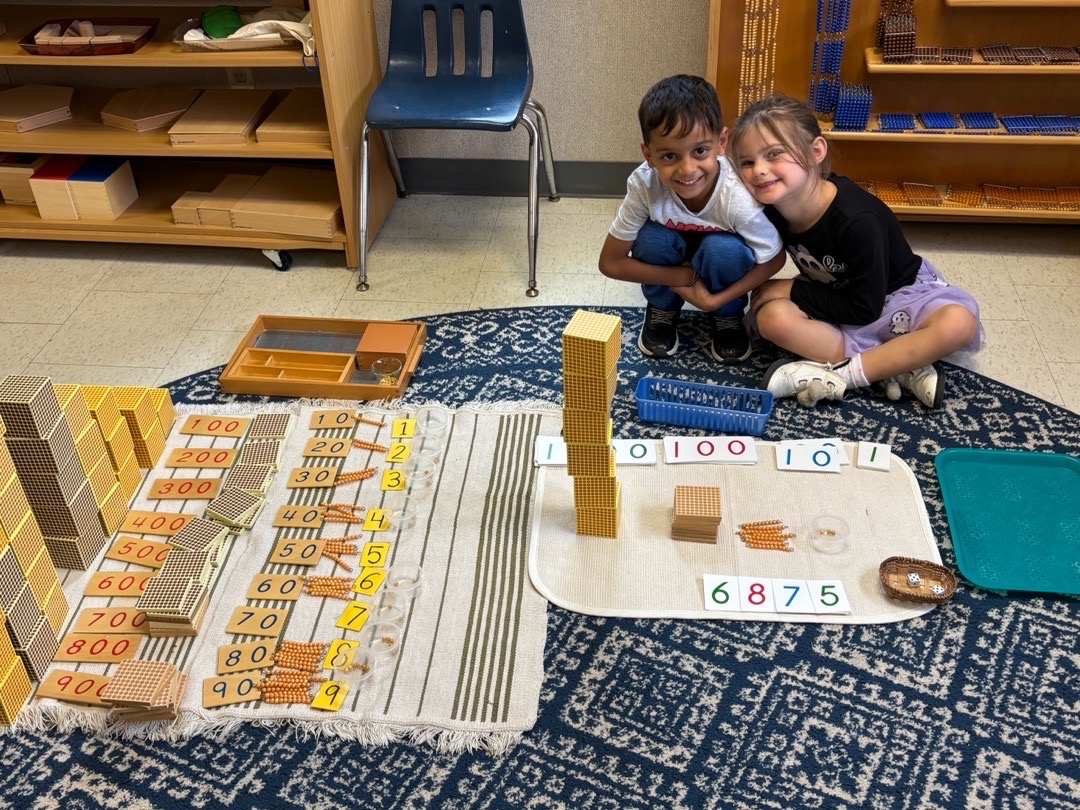
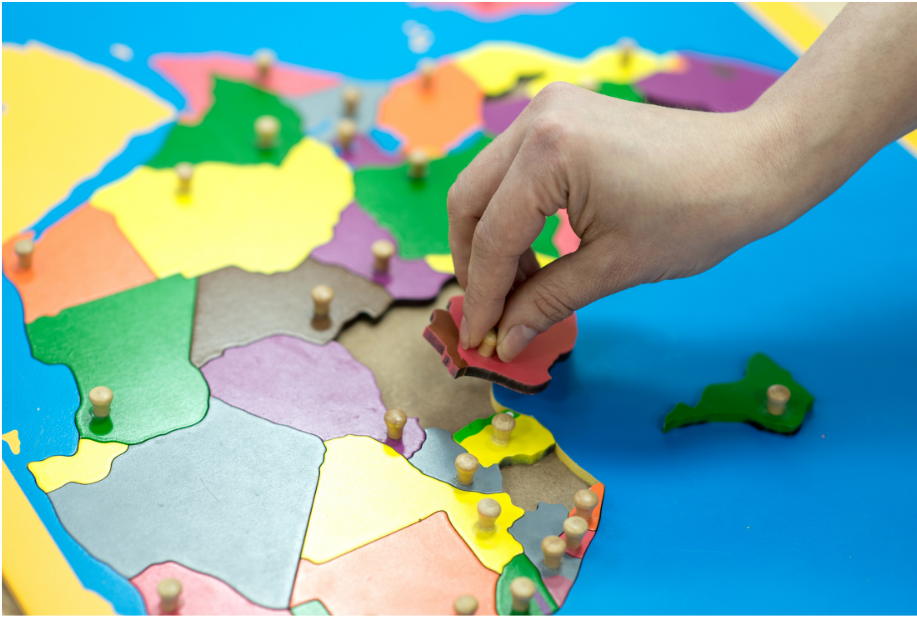
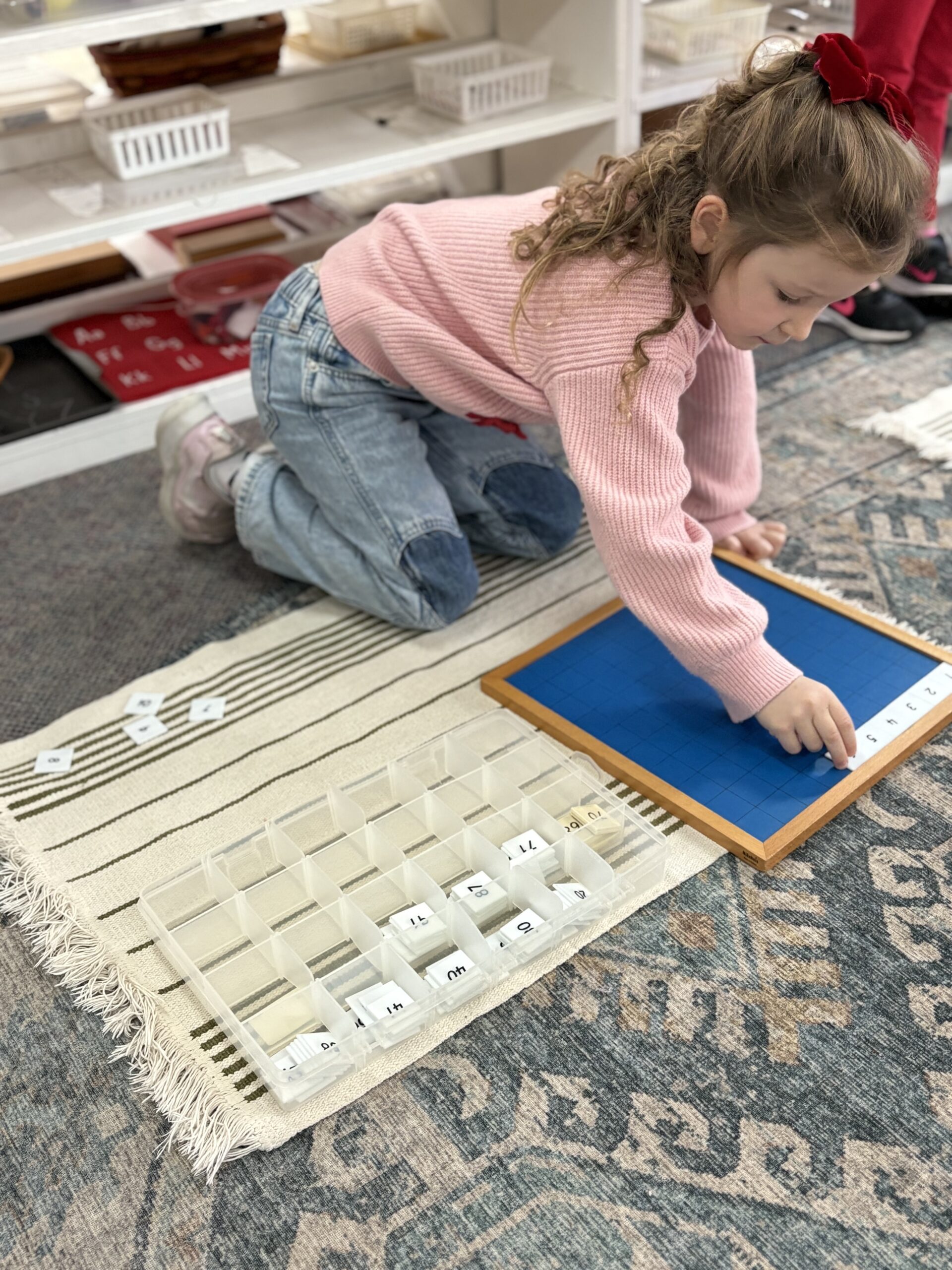
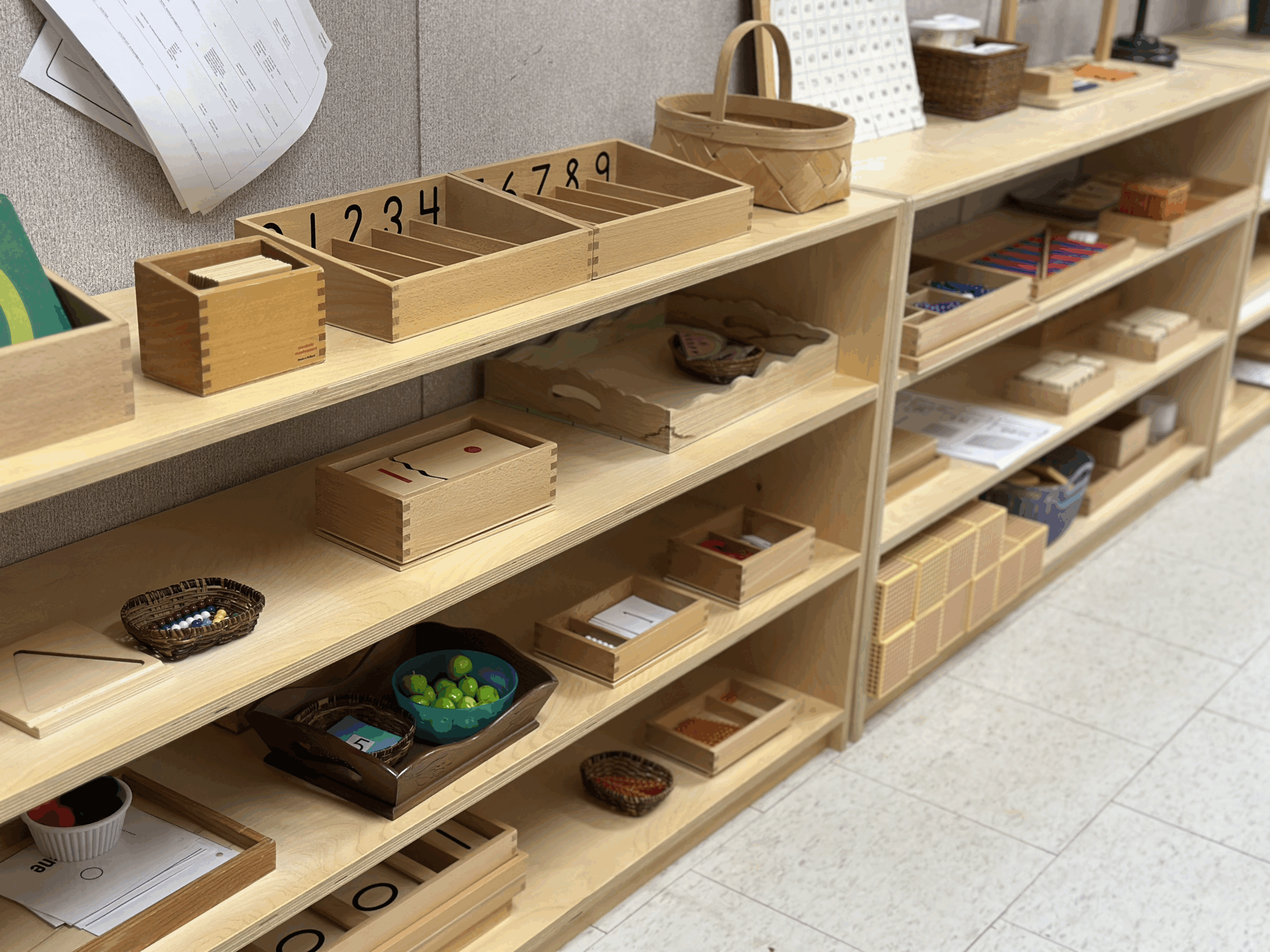
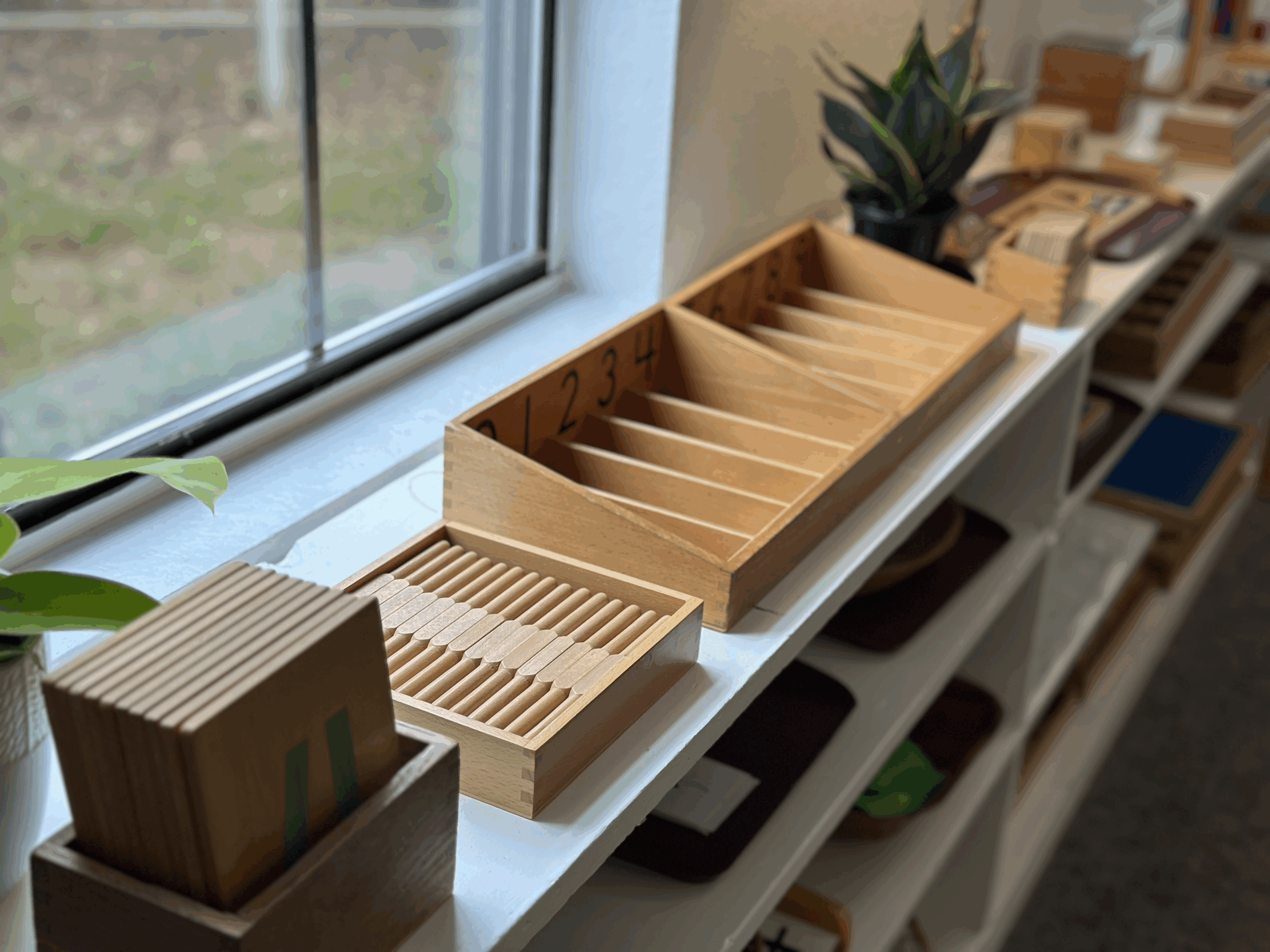
Our Primary Montessori curriculum combines learning with Montessori materials that make concepts come alive. Children practice practical life skills using tools like dressing frames, polishing sets, and pouring exercises to build independence and coordination. Sensorial materials such as the Pink Tower & Knobbed Cylinders,  refine their senses and lay the groundwork for math. In language, children work with Sandpaper Letters, the Moveable Alphabet, and phonetic objects to develop reading and writing skills. Math concepts are introduced through the Number Rods, Golden Beads, and Stamp Game, helping abstract ideas click through exploration. Other studies are supported by world puzzle maps, botany experiments, classification cards, and biological timelines, that connect children to geography, science, and the arts, making each day both meaningful and inspiring.

Mixed-Age Classrooms

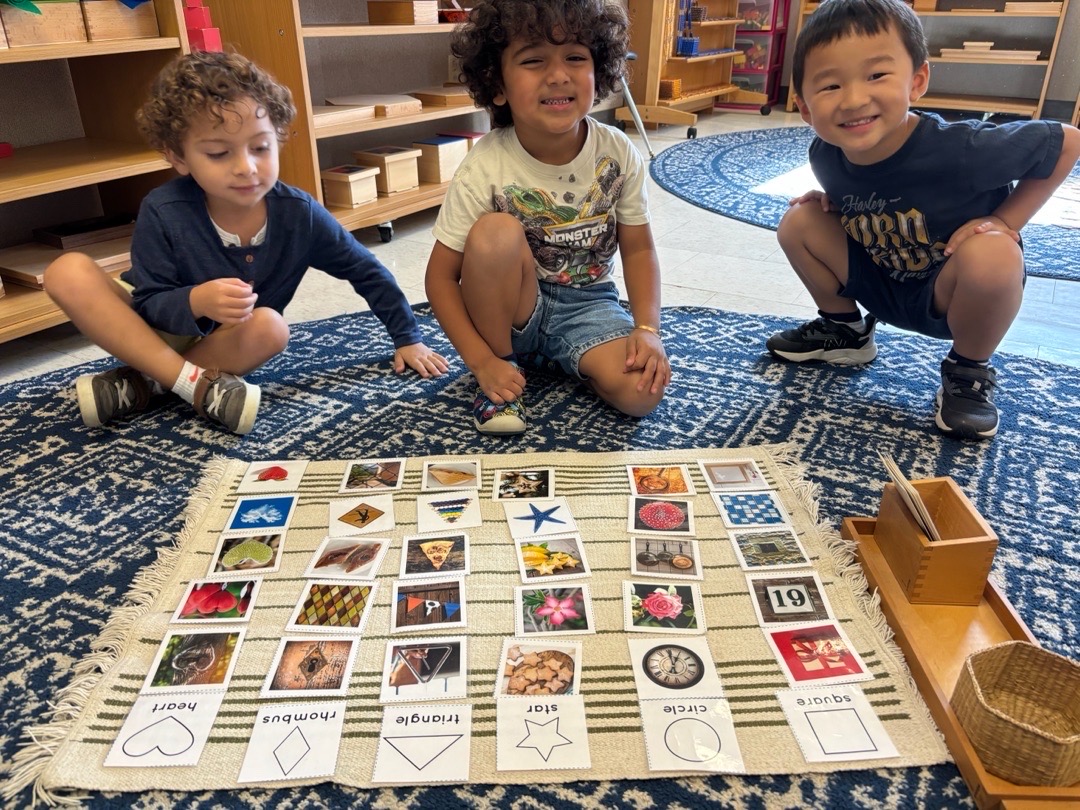
With mixed ages working together in our primary Montessori classrooms, younger children are inspired by their older peers, while older ones gain leadership by helping their friends. Your child spends time learning alongside older children, who may show how to use counting beads or help with vocabulary work. When your child masters a skill, they in turn guide a younger peer through a practical life exercise, such as pouring water or zipping a jacket. This cycle of mentoring fosters confidence, compassion, and collaboration.

Freedom Within Limits

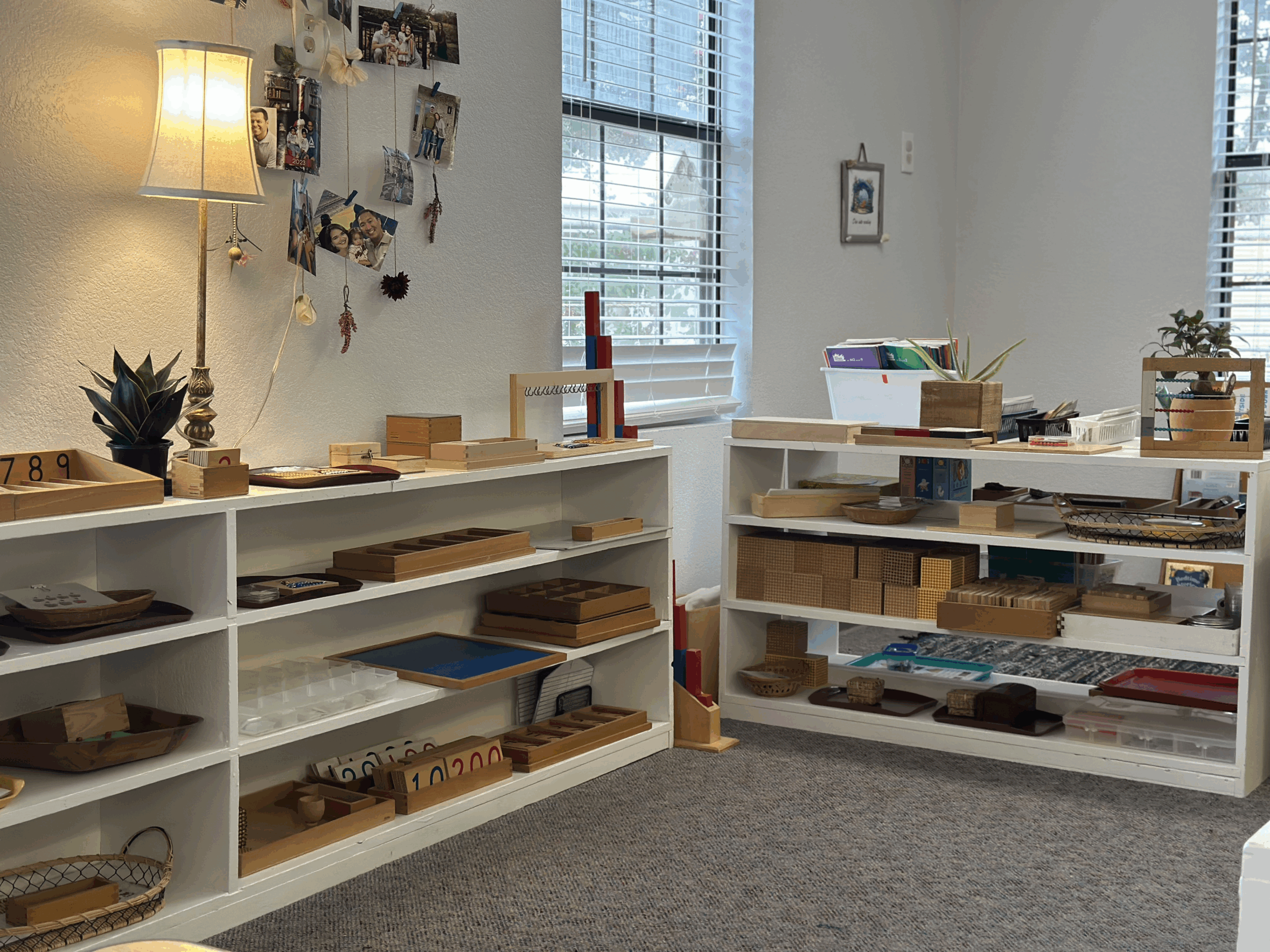
Imagine your child stepping into our primary Montessori classroom, greeted by shelves full of engaging, hands-on materials. Instead of being assigned the same worksheet or project as everyone else, your child is encouraged to choose work that interests them; perhaps your child begins arranging colorful beads to learn about numbers and counting, pouring water to develop coordination and wrist muscles for writing, or exploring sandpaper letters to discover sounds and words.

Hands-on Sensorial Learning

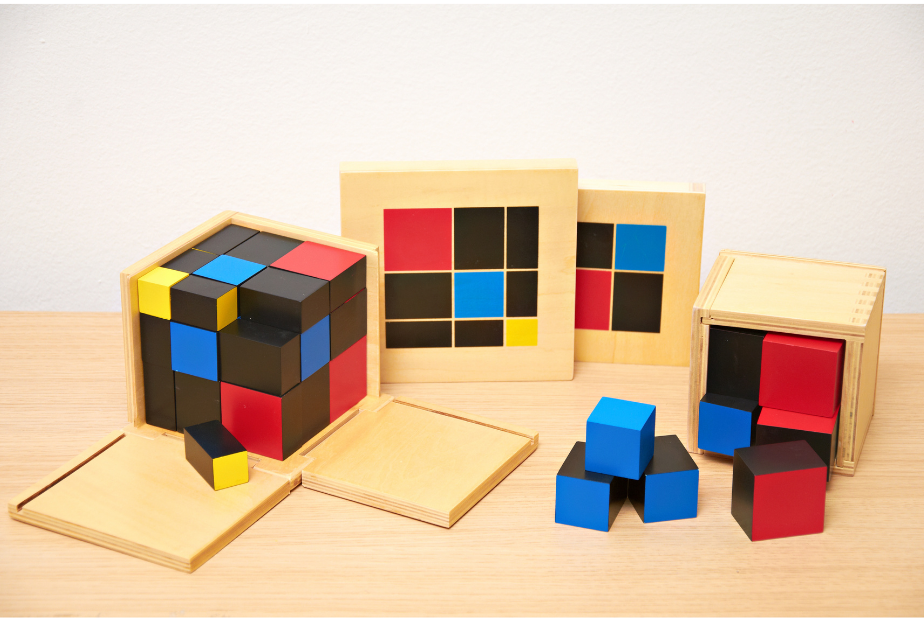
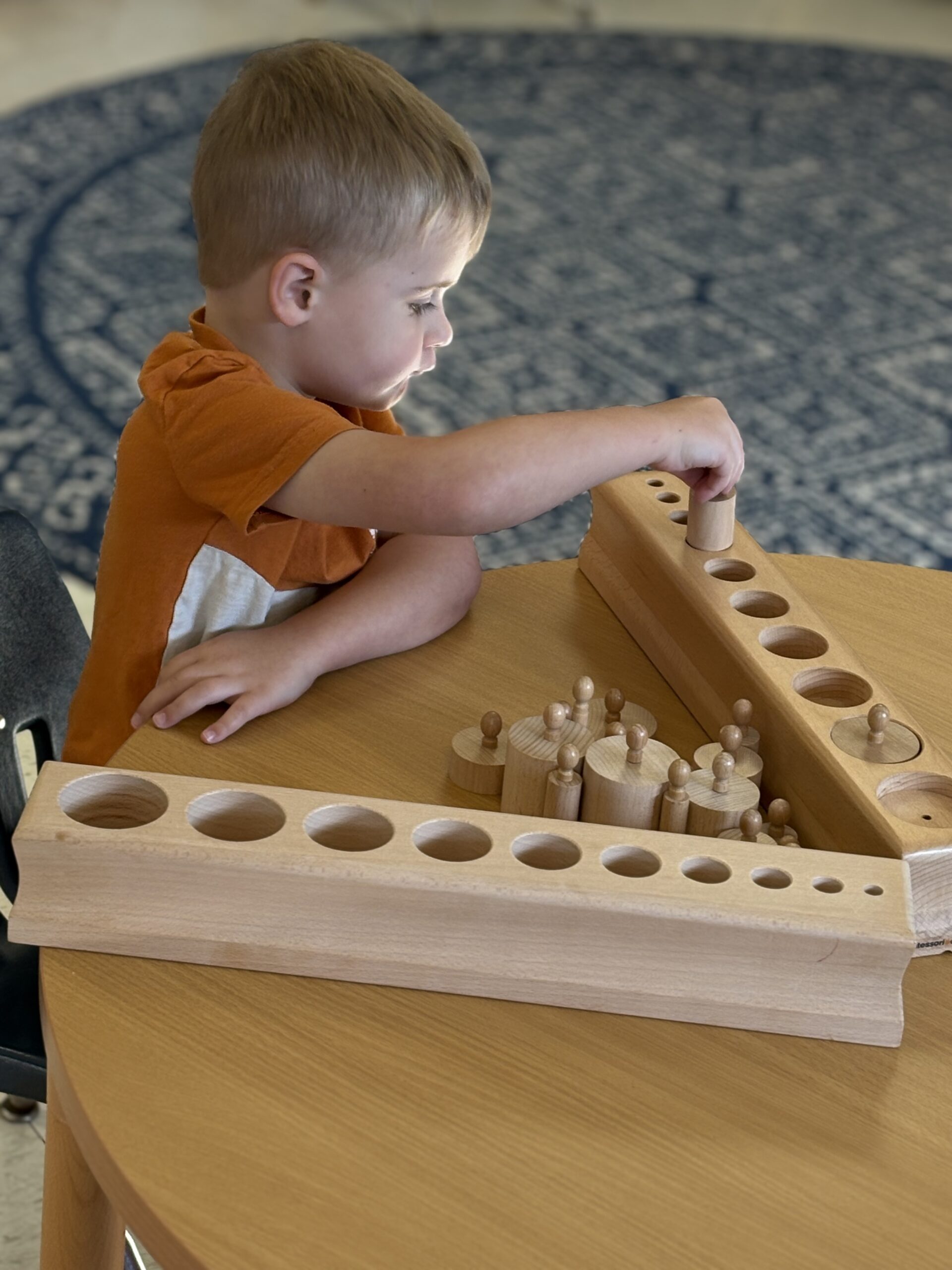
Montessori materials are meticulously designed and sequenced by difficulty, following the child's natural progression from simple to complex. You child may select the Knobbed Cylinders and works to fit them into the correct holes, refining their hand muscles and visual discrimination. Later, they pick up the Red Rods to explore length, ordering them from shortest to longest and building the foundation for later math concepts. At another moment, they may choose the Binomial Cube, a brilliant wooden puzzle that, while fun, also lays groundwork for higher-level algebra.

Individualized Learning

Imagine your child entering the classroom with shelves filled with materials of varying challenge. The teacher observes your child, and perhaps the child is drawn to the Pink Tower. As the teacher notices skill mastery, she gently presents the Brown Stair, a step up in complexity, and waits for your child’s interest to blossom. Your child moves through activities at their own pace. If they’re particularly fascinated by math, they might spend extra time working with Number Rods, then progress to the Golden Beads for more advanced counting and understanding of place value.

Practical Life Skills

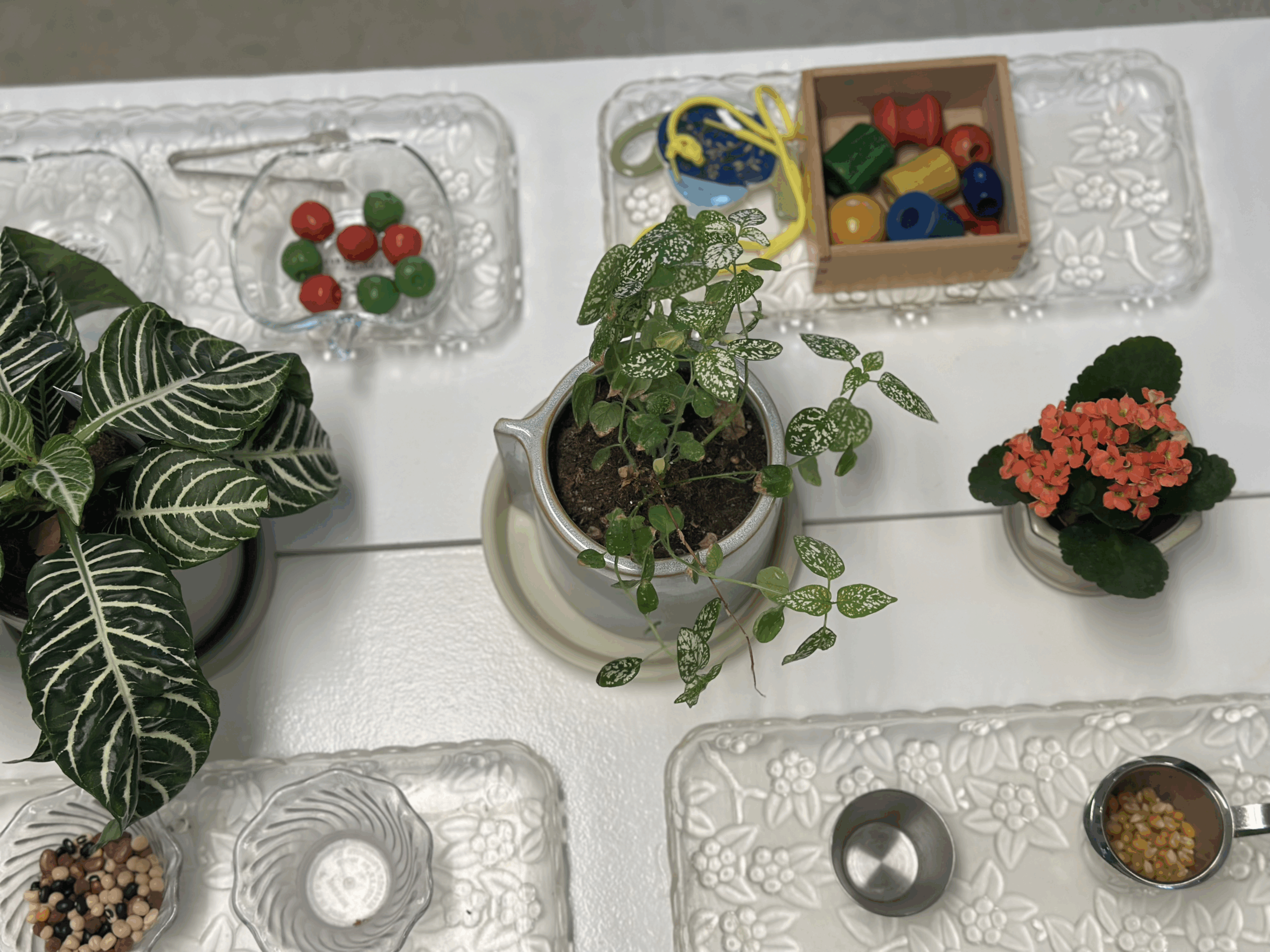
Children pour water or grains using small pitchers and spoons, set tables with real dishes and utensils, prepare simple snacks like slicing fruit, and wash their own dishes. They sweep floors, dust shelves, water plants, and care for classroom pets, fostering responsibility and pride. Dressing frames help them master buttoning, zipping, and lacing, while grace and courtesy lessons encourage polite social interactions. These purposeful tasks are freely chosen and repeated until mastery, nurturing concentration, confidence, and a strong sense of belonging in the classroom community.

Certified Teachers

Visualize our certified teachers as guides who gently lead each child’s unique learning journey. Rather than delivering lessons to the whole class at once, they follow the child or observe closely to understand each child’s interests, strengths, and challenges. Based on these insights, they introduce materials and activities tailored specifically to support that child’s development. When conflicts or social challenges arise, the teacher models and coaches children through respectful communication and problem-solving, guiding them to resolve issues peacefully themselves. The teacher’s role is to create a nurturing environment where your child feels safe, respected, and empowered to take charge of their own learning and growth.
The MCDS Difference

What truly sets our program apart is our exceptional team of dedicated teachers. Each is highly trained in the Montessori philosophy and brings a deep passion for guiding children through these formative years. They know when to step back and let discovery unfold and when to step in with gentle encouragement and support. With patience, warmth, and expertise, our teachers create an atmosphere where every child feels seen, valued, and excited to come to school each day. Their dedication ensures that your child’s early education is not just a stepping stone, but a joyful journey that will last a lifetime. 

Why Choose the Montessori approach?

Learn more about why we study and use the Montessori approach in all of our classrooms, and why we think it is important to have Montessori-certified teachers to guide the students in their educational journey.

What Are the Next Steps?

Ready to move forward and begin the application process at MCDS? 

Application

Once you have completed the tour, then it is time to apply! You will need to create a Brightwheel account and complete the MCDS application form and submit the nonrefundable $100 fee.

Enrollment

Once the application is completed and fee received, admissions will schedule a child observation. Upon completion of observation, admissions will extend an invitation to apply at the school and begin the enrollment process.
Frequently Asked Questions

How are the classrooms and materials set up for this age group?

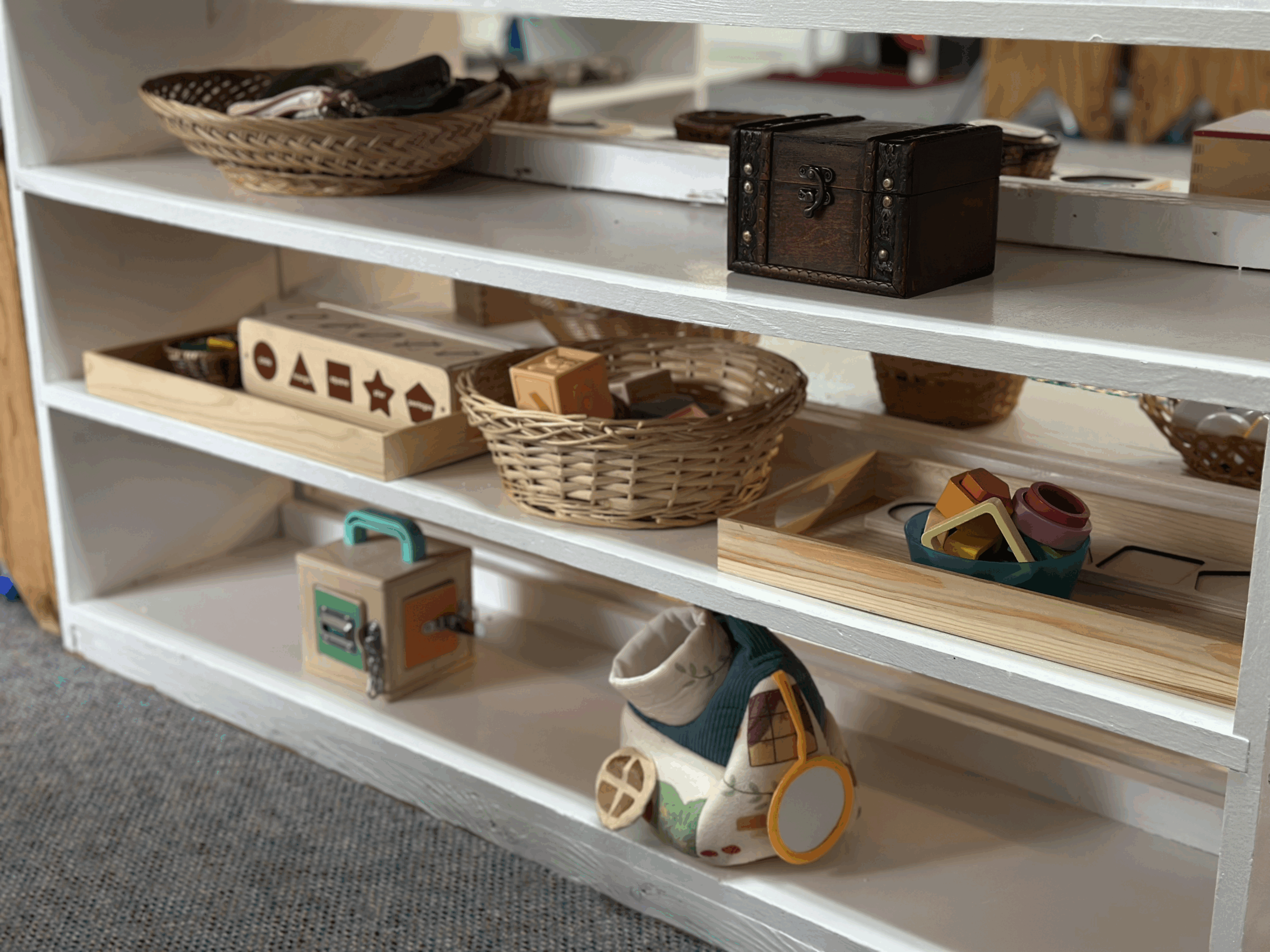
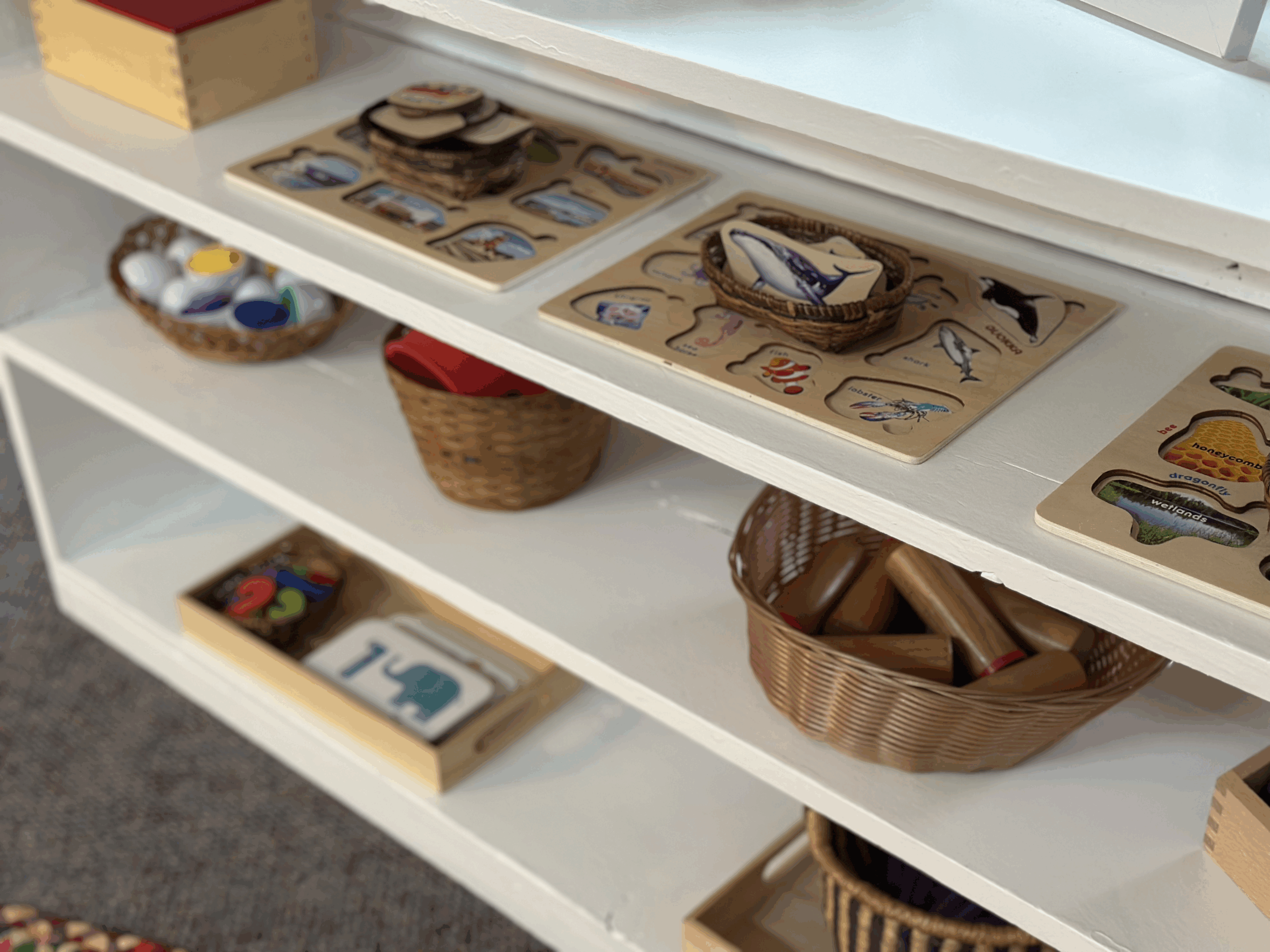
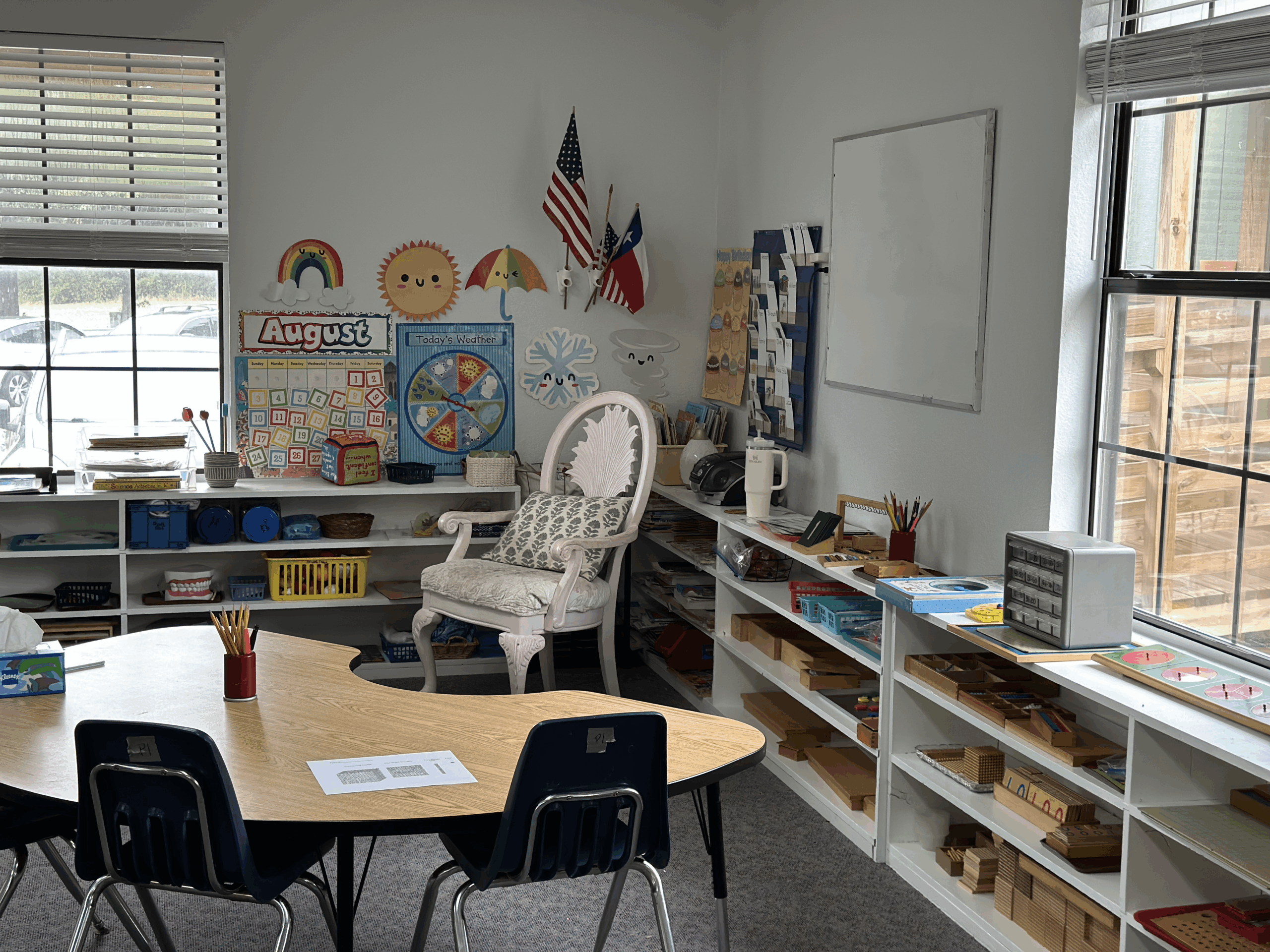
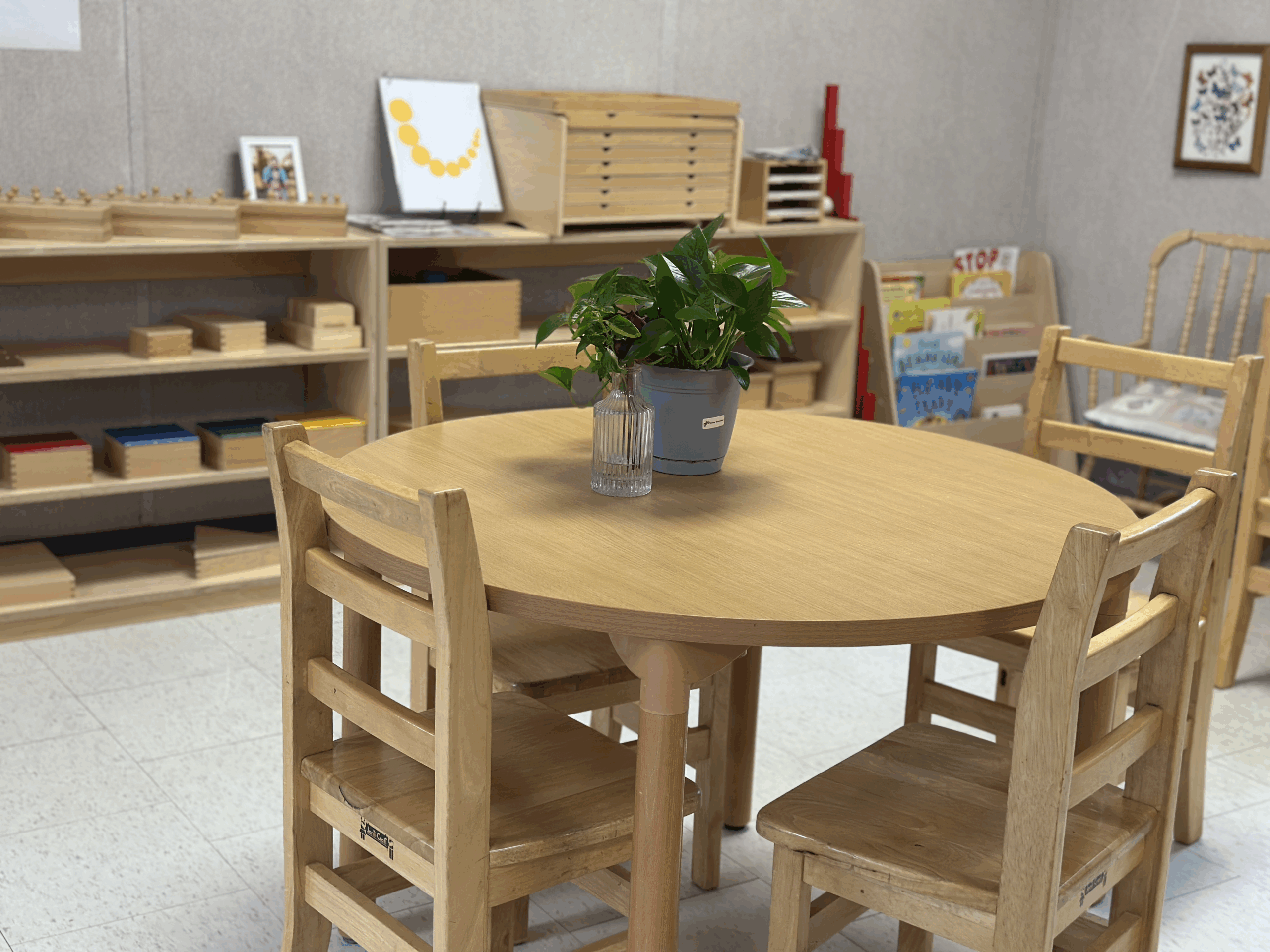
Classrooms are carefully prepared with low shelves, small tables, and child-sized sinks and toilets, enabling children to access materials and care for themselves and their environment independently. The materials are engaging, safe, and challenge children at their developmental level without overwhelming them.

How do you assess progress without frequent tests or grades?

Teachers keep detailed observations and records of each child’s lessons and mastery, then they share progress through conferences and reports cards.

How do you handle discipline and social challenges?

Montessori emphasizes respect and natural consequences, with clear, consistent limits. Teachers help children learn self-control, problem-solving, and making amends when mistakes happen.

How do Montessori kindergarten graduates transition to traditional first grade or public school?

Most children transition well into public school. They bring strong concentration, independence, and often solid academic skills, which help them adapt to a more traditional setting.

How is independence encouraged?

Children learn to care for themselves and the classroom like choosing their work, returning materials, tidying up workspaces, putting a coat on, caring for the garden, and preparing snacks. All which builds confidence and responsibility.

What kinds of activities will my child participate in each day?

Children engage in language development (e.g., sounding letters and words a loud) , practical life skills (watering plants, preparing snacks, cleaning), motor development (walking, climbing, pouring, transferring objects), and social experiences. Our materials & activities are rotated out to keep the children's minds curious and engaged. Many activities are repeated for mastery.

Are children of different ages grouped together? Is that beneficial?

Yes, Montessori Primary classrooms typically have a mixed age range (3–6 years). This grouping allows younger children to learn from older peers and enables older children to develop leadership and empathy. It encourages collaborative learning and confidence building for all.

Is lunch or snack provided, and what about nap/rest?

MCDS families can pack lunches during the week, or families can choose to order lunches through the school Monday, Wednesday, & Friday. We order meals from Chick-fil-a, Jason's Deli, & Marco's Pizza. Full day primary students do not have nap time, but students may elect to have peace time.

Learn About Our Montessori School Programs

Our Montessori Programs include Pre-Primary to Upper Elementary, and we start enrolling students as early as 15 months. We offer both half day and full day programs for our Pre-Primary and Primary students allowing schedule flexibility for parents and students.

Our Programs Core hours are from 8:15 am - 2:15 pm, however we off early bird hours with drop-off beginning at 7:30am and extended after care hours until 5:30pm.

Pre-Primary & Toddler Program

18 mos. - 3 years old

Primary & Pre-K & Kindergarten

3 - 6 years old

Lower Elementary & 1st- 3rd grade

6 - 9 years old

Upper Elementary & 4th - 6th grade

9 - 12 years old

Ready to Join Our Family?

Interested in what your next steps are? We are passionate about delivering an exceptional Montessori school experience to our families. Call us or click below to schedule a tour, apply, or complete a contact form to learn more information about what our school has to offer. 

Scroll to Top