Montessori Lower Elementary Program

1st - 3rd Grade

Students ages 6-9 years
About Our Lower Elementary Classroom

We are so glad you are considering the Montessori Country Day School as the trusted, nurturing place for your child's educational journey. We truly understand the importance of finding the right school fit for your child and we are committed to helping you decide if our Montessori Lower Elementary Program and curriculum are the right choice for your child and family. 

Mixed-Age Classrooms

In our elementary Montessori classroom, mixed ages form a dynamic learning community where older students naturally take on leadership roles during group projects and collaborative work, thus inspiring younger classmates through example.Further more, older students model respect and courtesy, not only toward peers, but also with classroom materials and the natural environment which sets a tone of kindness and responsibility. Younger students observe and learn from these behaviors, especially during group circle time and reflective discussions. This ongoing cycle of mentoring builds confidence, compassion, and collaboration, creating a supportive atmosphere.

Freedom Within Limits

Imagine your child stepping into our Montessori classroom, and the teacher gathers the students to share the Great Lesson about how the universe began from nothing, describing the Big Bang and the creation of stars, planets, and eventually Earth. As the story unfolds, children visualize the chaos of volcanoes and the cooling of the planet, sparking curiosity about rocks, oceans, and continents. Students explore related materials from building models of the solar system and arranging timelines of Earth's formation to experimenting with physics by observing simple chemical reactions like volcano eruptions.

Hands-on Sensorial Learning

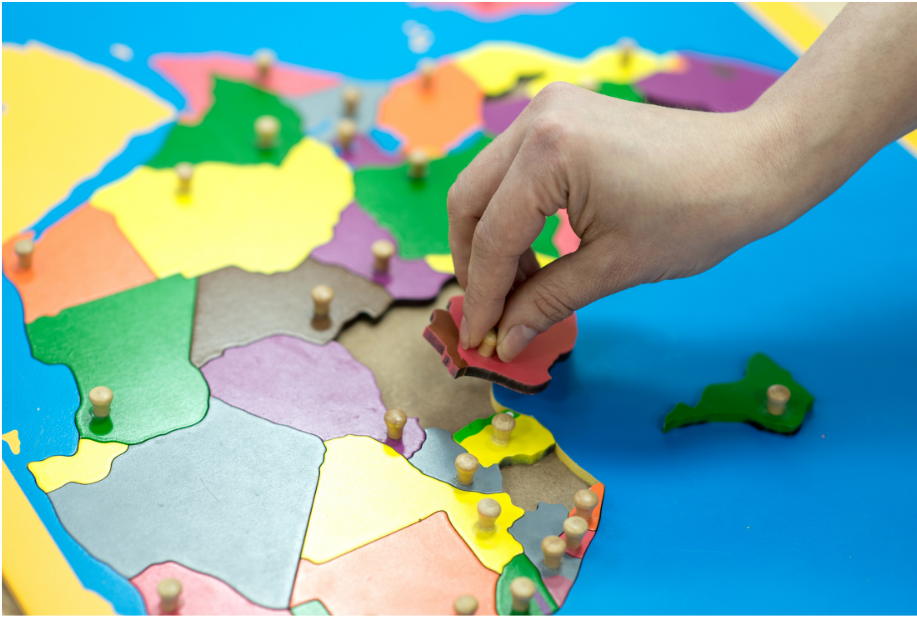
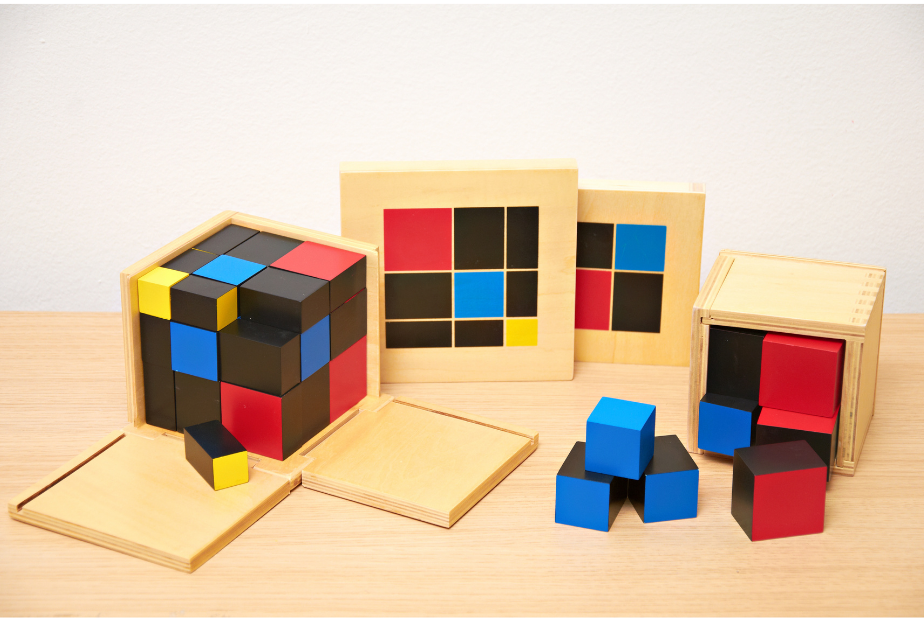
After hearing the Great Lesson of The Coming of the Universe, students might engage with experiments demonstrating the states of matter using water, ice, and vapor, or work with physical models of the solar system and chemical elements to understand Earth's formation and cosmic order. Additionally, the lesson on The Coming of Life is complemented by hands-on activities like examining fossils, assembling the Tree of Life with colorful charts, or interacting with biological specimens to explore evolution and ecosystems. These materials transform the stories of the Great Lessons into interactive experiences that relate to cosmic, biological, historical, language, and mathematical concepts, thus deepening their understanding and maintaining their natural curiosity.

Individualized Learning

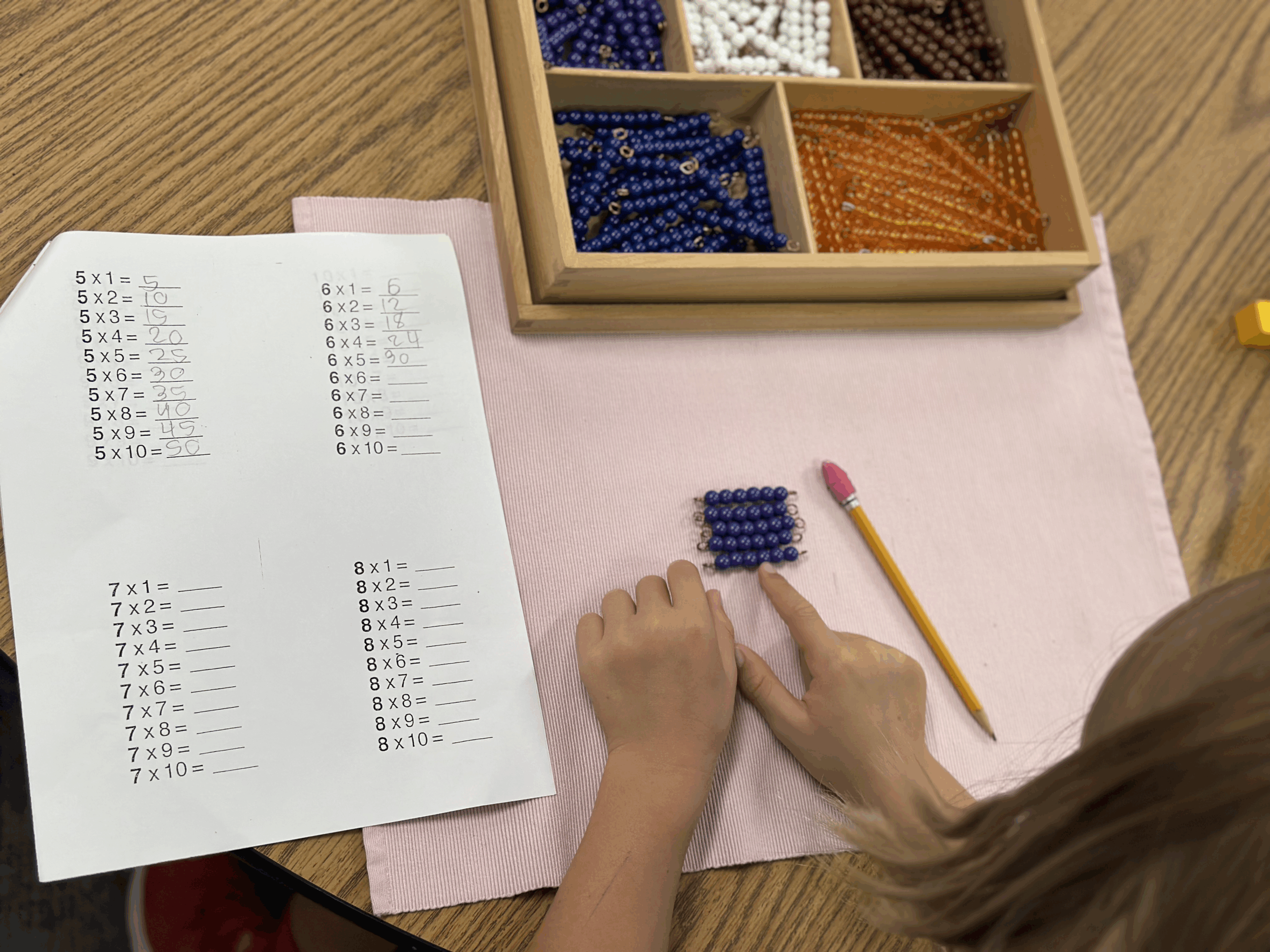
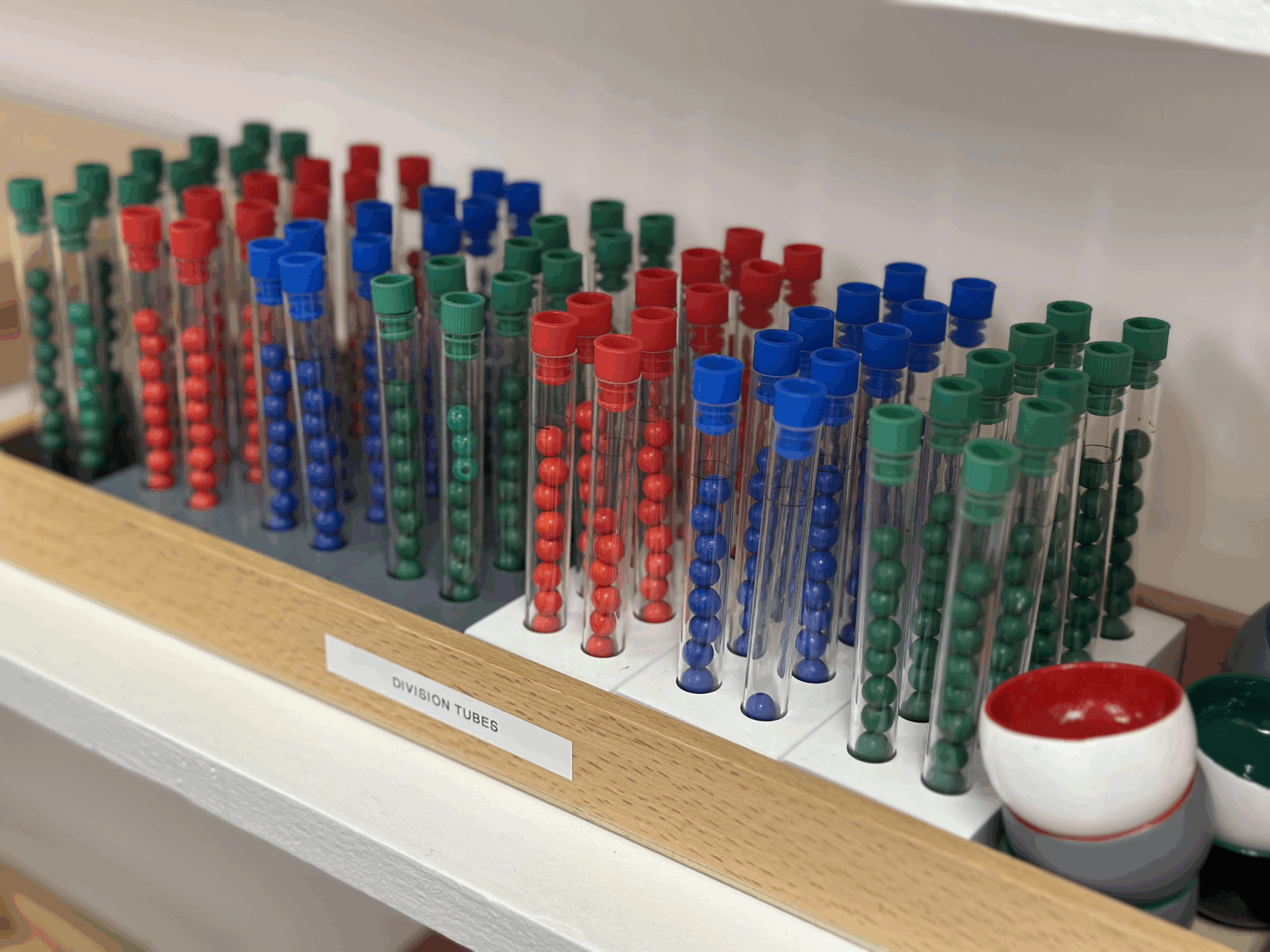
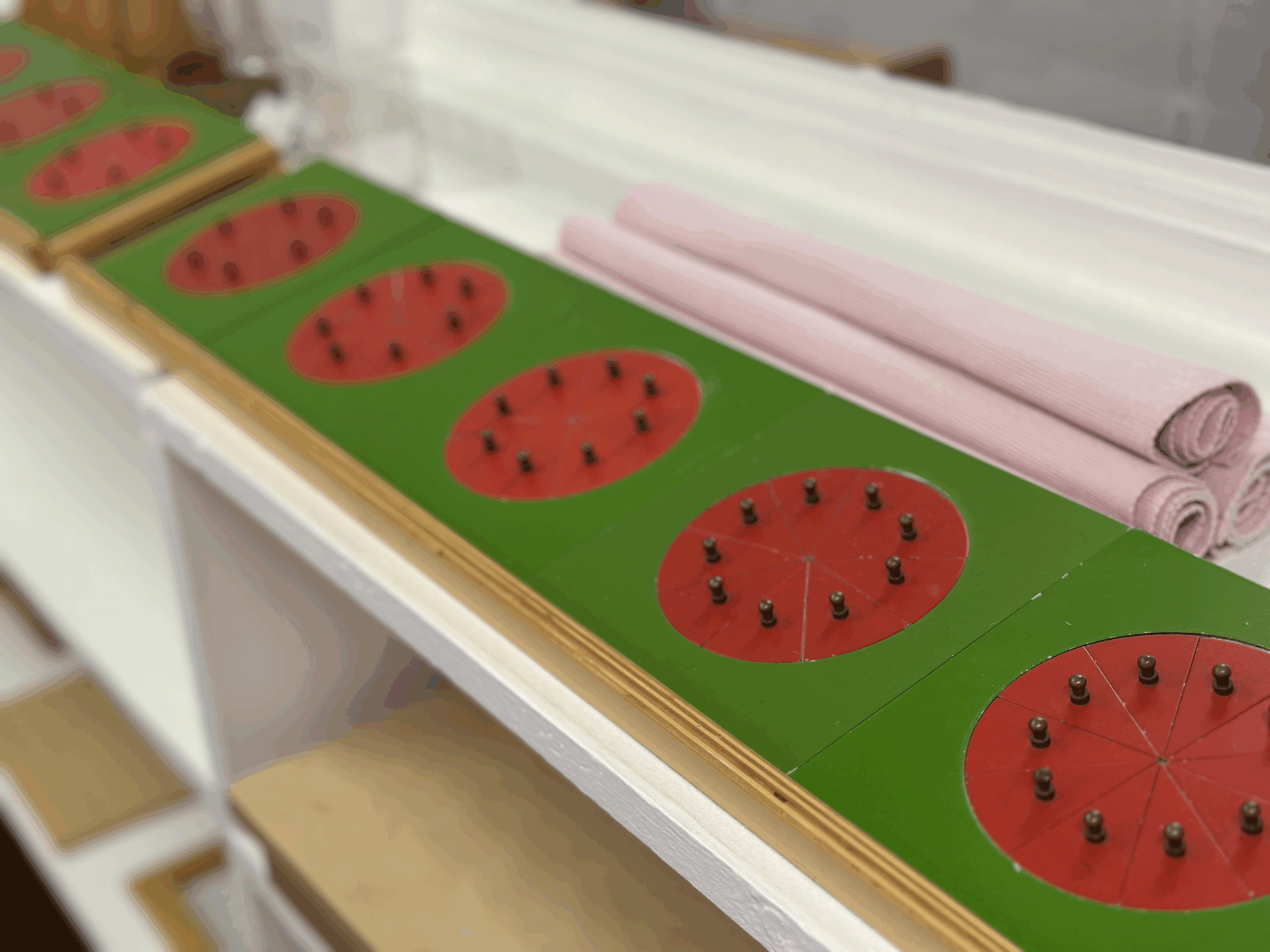
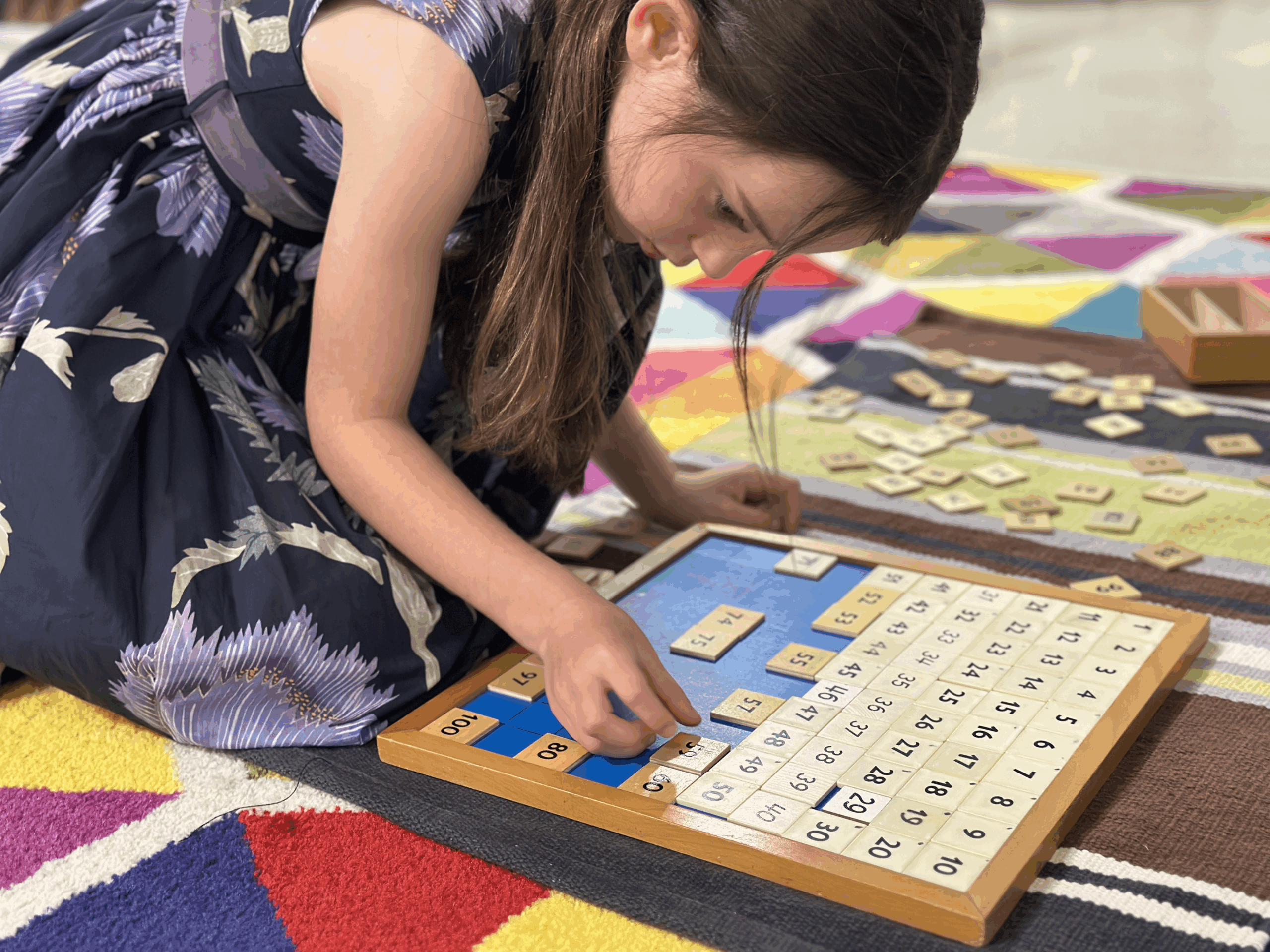
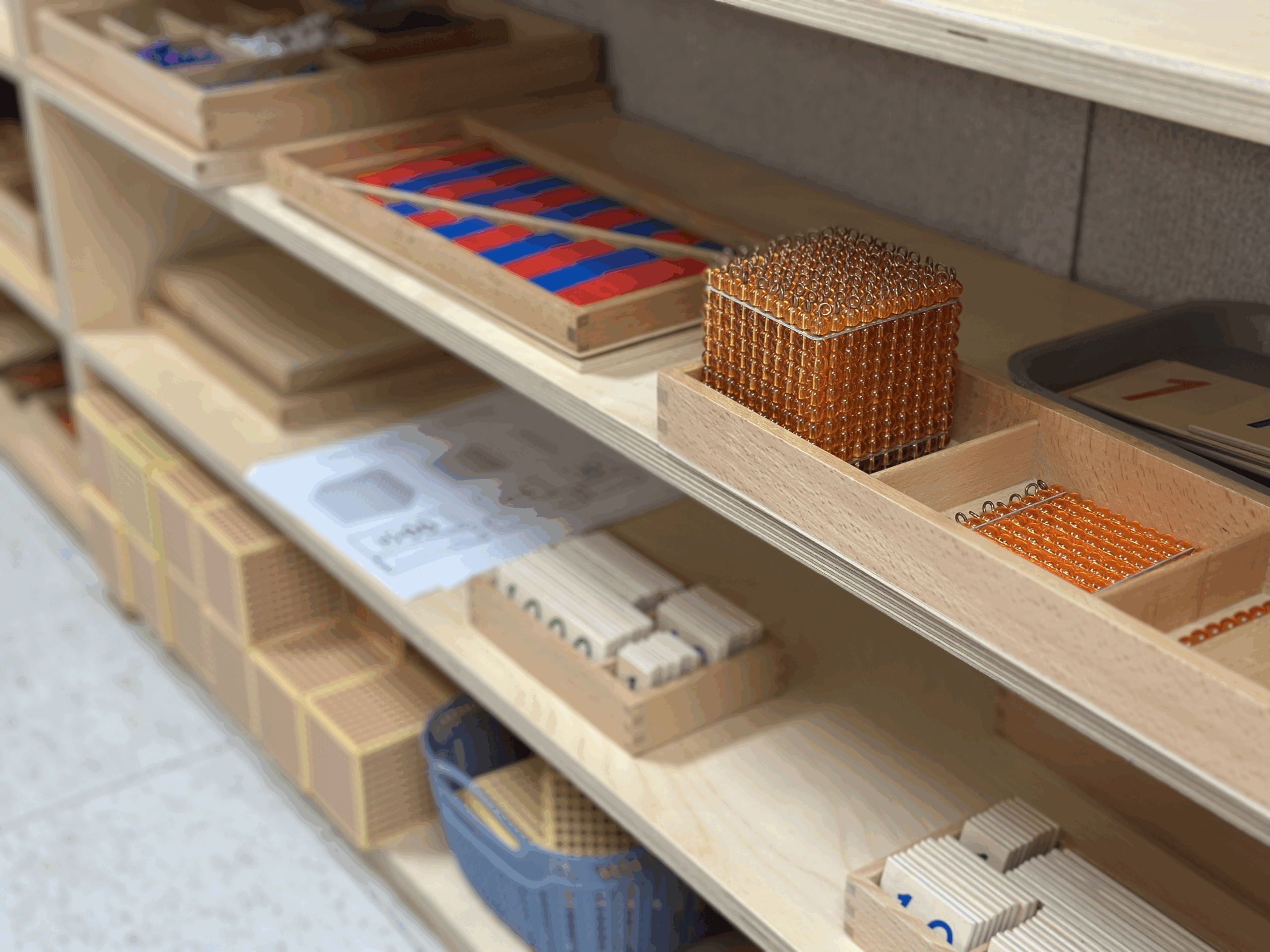
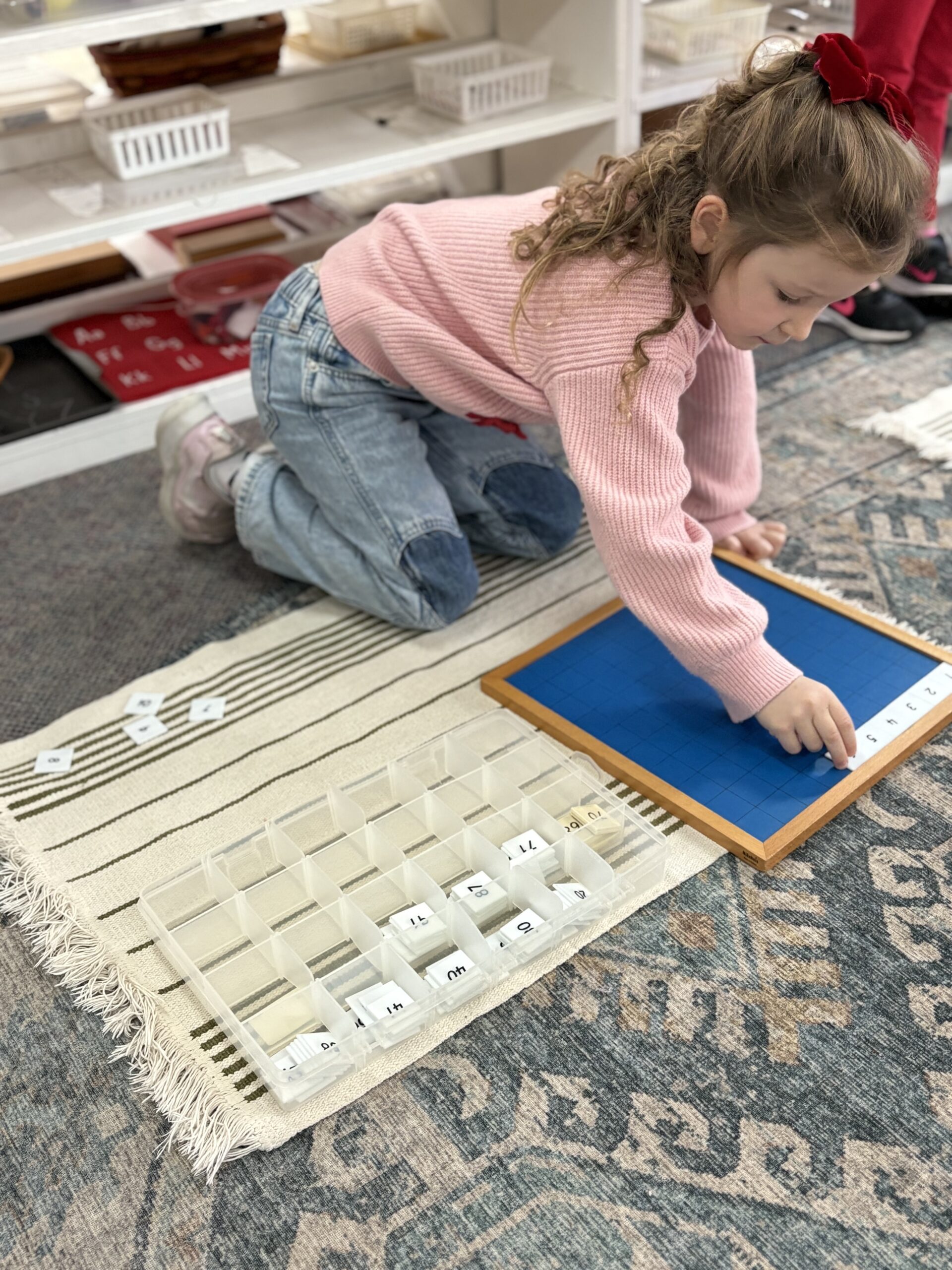
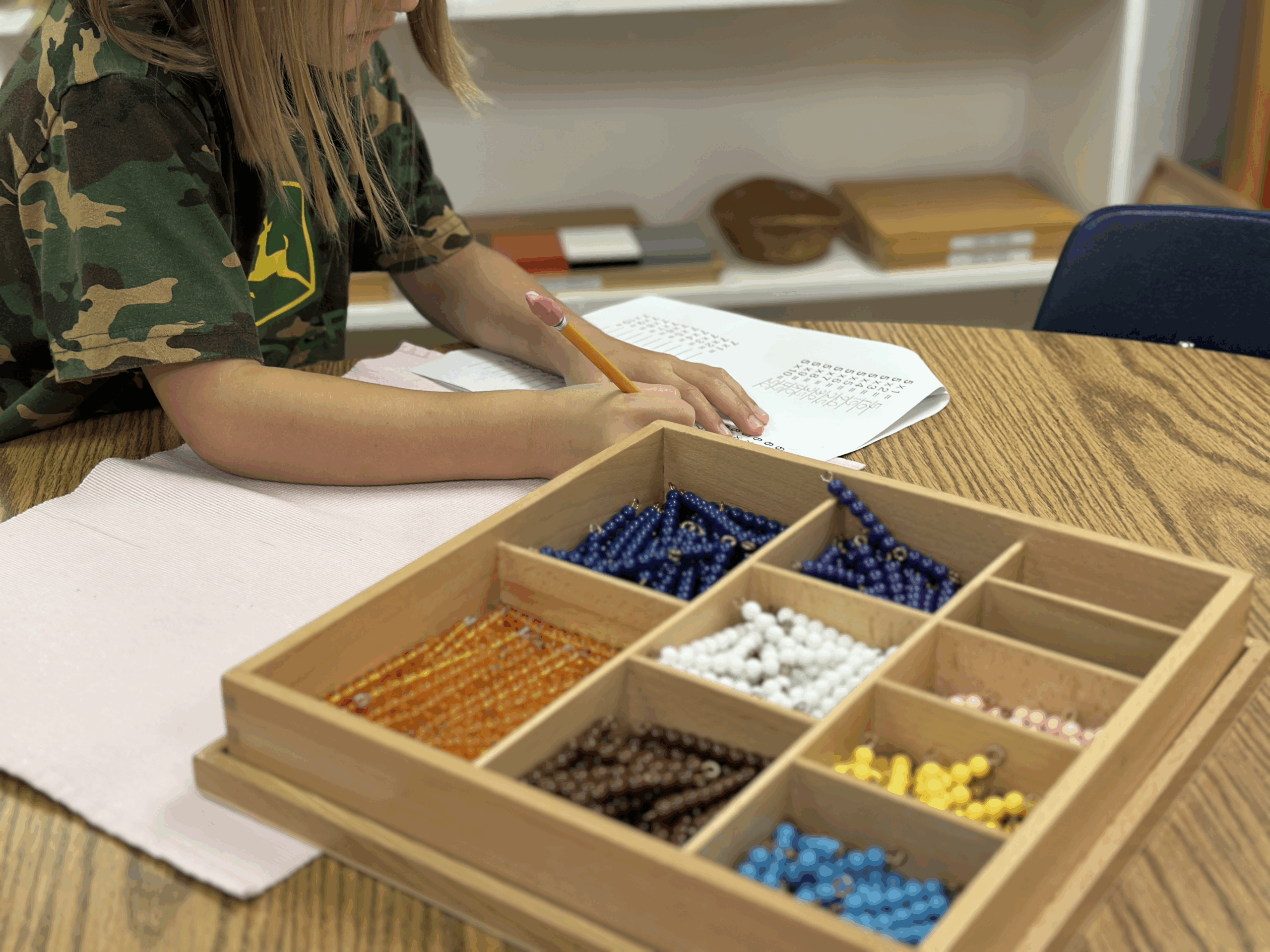
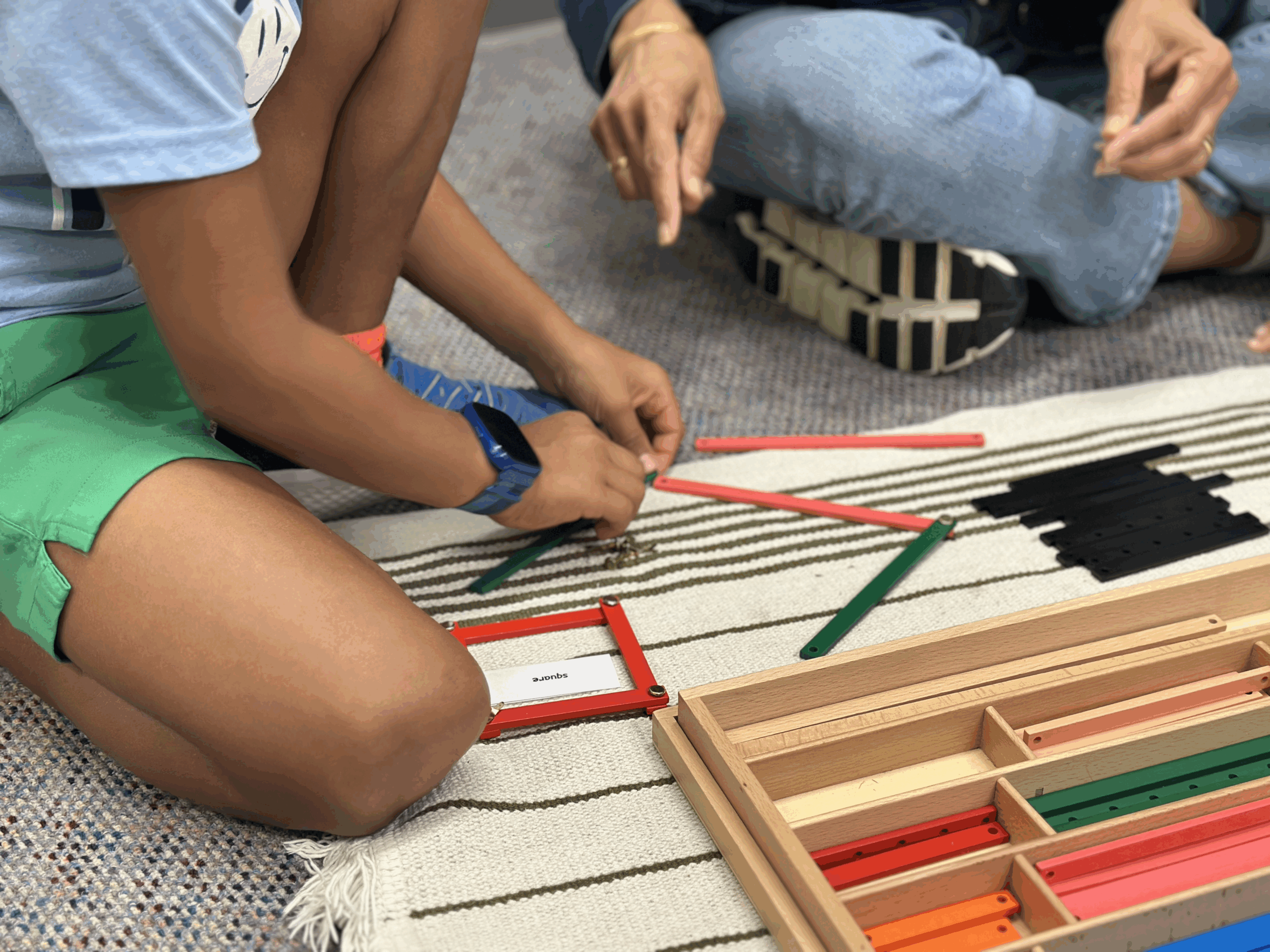
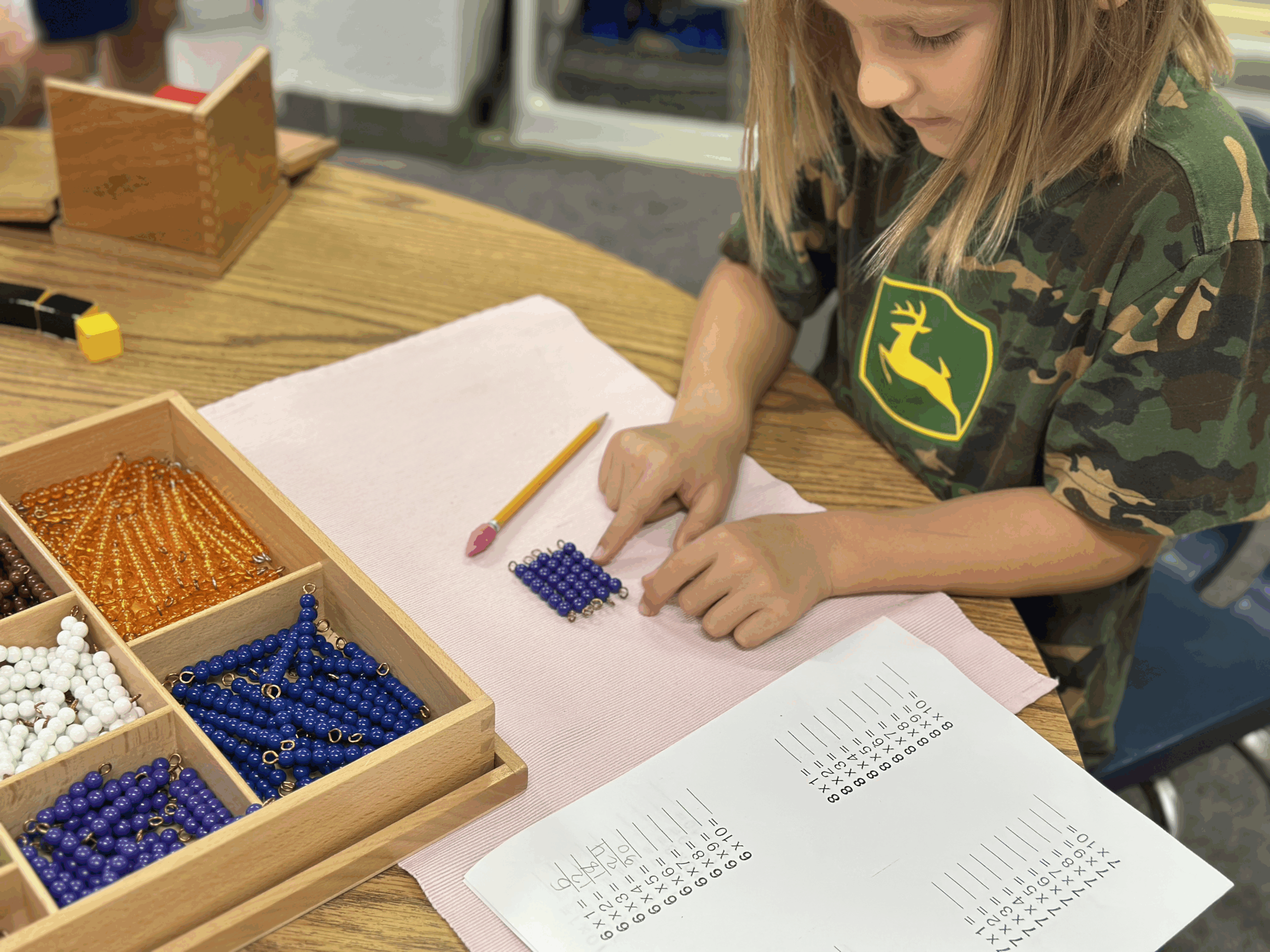
Imagine your child entering the classroom with shelves filled with materials of varying challenge. Materials like geometric solids, bead chains, sentence components, biomes, and timelines are displayed clearly, inviting exploration. There is a cozy reading nook filled with books and quiet spaces for reflection. The classroom feels calm and uncluttered, with natural elements such as plants adding tranquility. Every detail from child-sized furniture to the orderliness of the shelves encourages independence, focus, and curiosity as the student settles in to choose work that sparks their interest and suits their developmental needs withe teacher as a guide.

Practical Life Skills

Practical life skills such as care of self managing personal hygiene like hand washing and manicures, and developing good manners and grace and courtesy in social interactions. We also teach care of the environment, sweeping floors, dusting shelves, watering plants, caring for classroom pets, recycling, and maintaining an orderly and clean classroom space. Students learn grace and courtesy such as practicing polite greetings, sharing, resolving conflicts peacefully, and participating in community-building tasks like setting the table or organizing group events. In the classroom, we work on creative and manual skills like sewing, weaving, gardening, and even planning and executing classroom projects.

Certified Teachers

Visualize our certified teachers as guides who gently lead each child’s unique learning journey. Rather than delivering lessons to the whole class at once, they follow the child or observe closely to understand each child’s interests, strengths, and challenges. Based on these insights, they introduce materials and activities tailored specifically to support that child’s development. When conflicts or social challenges arise, the teacher models and coaches children through respectful communication and problem-solving, guiding them to resolve issues peacefully themselves. The teacher’s role is to create a nurturing environment where your child feels safe, respected, and empowered to take charge of their own learning and growth.
MCDS Lower Elementary Curriculum

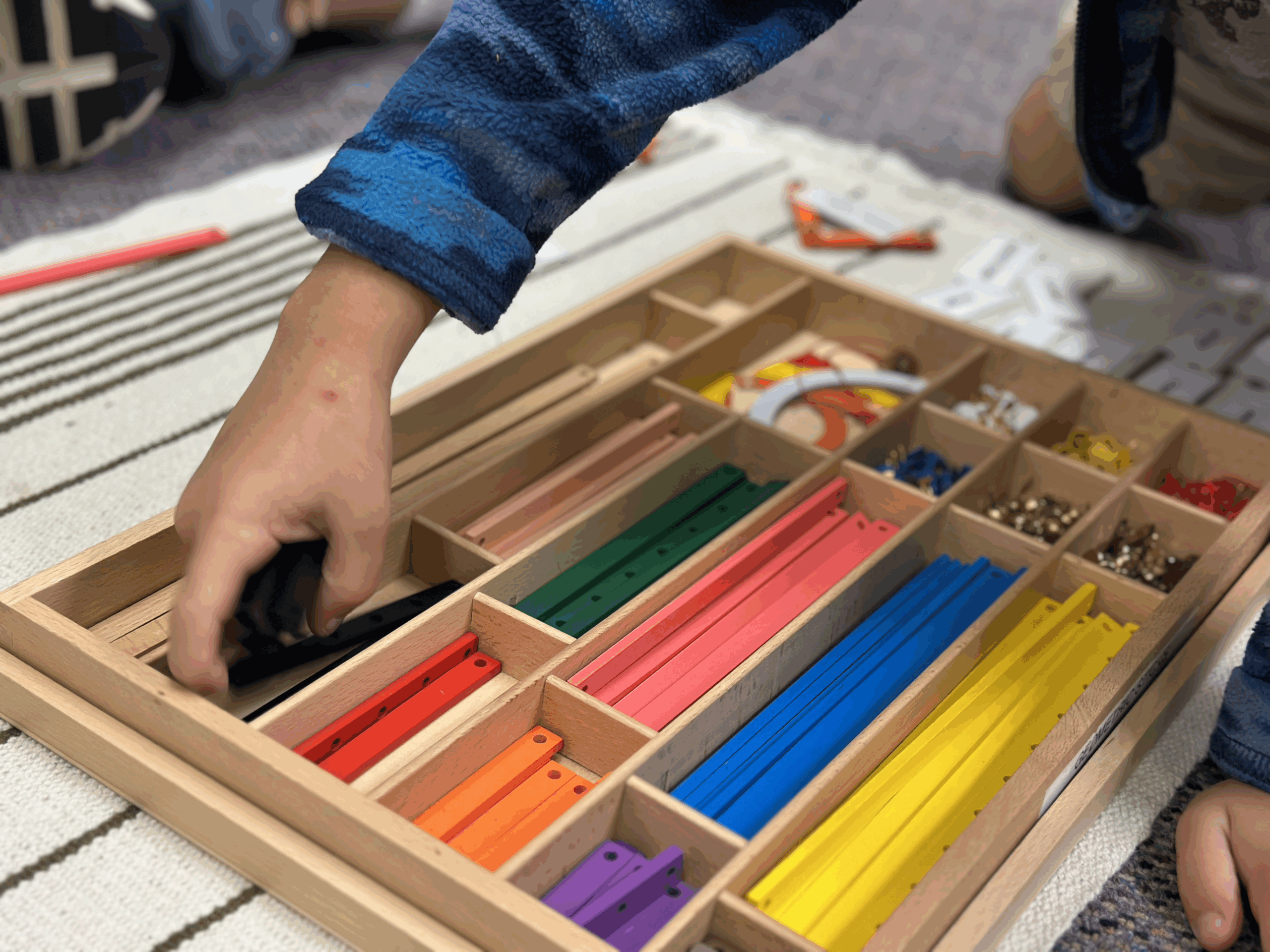
Our Lower Elementary Montessori curriculum weaves together the Five Great Lessons with core curriculum areas such as Practical Life, Science, Mathematics, Geometry, Language Arts and Writing, and Culture Studies to create a balanced, integrated learning experience. The Great Lessons provide inspiring, overarching stories about the coming of the universe, life, humans, language, and numbers that ignite children's curiosity and become the framework for their exploration across subjects. Using the Five Great Lessons, students to dive into their studies of the Mathematics, Sciences, Language Arts, and Cultural studies and to connect these lessons to geography, science, history, and the arts using tangible Montessori Materials. This approach supports each student's developmental pace and interests while promoting critical thinking, creativity, and a holistic view of knowledge, making Montessori elementary education uniquely engaging and effective for young learners.

Lower Elementary Routine

Take a dive into our Primary student daily routine

Morning Routine

Daily student drop off begins at 8:15 am. Students are greeted by teachers and then begin their individual work period. Individual work period is followed by snack, outdoor exploration and then circle time.

Mid-day Routine

After group circle time, students begin lunchtime preparations, they have lunch and clean-up, and then have independent reading time.

Afternoon Routine

Next, the students have co-curricular or specials class followed by their second work cycle. After completion of second work cycle, teacher holds circle time before dismissal.
IMG_0802 3IMG_0764 3

The MCDS Difference

What truly sets our program apart is our exceptional team of dedicated teachers. Each is highly trained in the Montessori philosophy and brings a deep passion for guiding children through these formative years. They know when to step back and let discovery unfold and when to step in with gentle encouragement and support. With patience, warmth, and expertise, our teachers create an atmosphere where every child feels seen, valued, and excited to come to school each day. Their dedication ensures that your child’s early education is not just a stepping stone, but a joyful journey that will last a lifetime. 

Why Choose the Montessori approach?

Learn more about why we study and use the Montessori approach in all of our classrooms, and why we think it is important to have Montessori-certified teachers to guide the students in their educational journey.

What Are the Next Steps?

Ready to move forward and begin the application process at MCDS? 

Application

Once you have completed the tour, then it is time to apply! You will need to create a Brightwheel account and complete the MCDS application form and submit the nonrefundable $100 fee.

Enrollment

Once the application is completed and fee received, admissions will schedule a child observation. Upon completion of observation, admissions will extend an invitation to apply at the school and begin the enrollment process.
Frequently Asked Questions

How are the classrooms and materials set up for this age group?

Classrooms are carefully prepared with low shelves, small tables, and child-sized sinks and toilets, enabling children to access materials and care for themselves and their environment independently. The materials are engaging, safe, and challenge children at their developmental level without overwhelming them.

How do we prepare students for non-montessori school?

Potty training in Montessori classrooms is approached as a natural, child-led process. Teachers observe signs of readiness (such as staying dry longer, showing interest in the toilet, or communicating about wet diapers), and support children through routines. Children are encouraged to use accessible potties or toilet seats, handle their own clothing, wash hands independently, and help with cleanup after accidents. The process avoids rewards and punishment, focusing instead on calm encouragement and respect for the child’s pace.

How do you handle discipline and social challenges?

Discipline in Montessori is handled with respect and guidance rather than punishment. Children are supported in expressing feelings, resolving conflicts, and making choices within clear boundaries that emphasize community and mutual respect.

What is a Montessori toddler program, and how does it differ from traditional daycare?

A Montessori toddler program is designed around the concept of the “absorbent mind,” where children naturally absorb information from their environment. Unlike traditional daycare, Montessori emphasizes individualized learning, hands-on activities, and an environment prepared to foster independence, concentration, and social skills.

What kinds of activities will my child participate in each day?

Children engage in language development (looking at picture books, naming objects), practical life skills (watering plants, preparing snacks, cleaning), motor development (walking, climbing, pouring, transferring objects), and social experiences. Our materials and activities are rotated out to keep the children's minds curious and engaged. Many activities are repeated for mastery and confidence.

Are children of different ages grouped together? Is that beneficial?

Yes, Montessori classrooms typically have a mixed age range (18 months–3 years for toddlers). This grouping allows younger children to learn from older peers and enables older children to develop leadership and empathy. It encourages collaborative learning and confidence building for all.

Learn About Our Montessori School Programs

Our Montessori Programs include Pre-Primary to Upper Elementary, and we start enrolling students as early as 15 months. We offer both half day and full day programs for our Pre-Primary and Primary students allowing schedule flexibility for parents and students.

Our Programs Core hours are from 8:15 am - 2:15 pm, however we off early bird hours with drop-off beginning at 7:30am and extended after care hours until 5:30pm.

Pre-Primary & Toddler Program

18 mos. - 3 years old

Primary & Pre-K & Kindergarten

3 - 6 years old

Lower Elementary & 1st- 3rd grade

6 - 9 years old

Upper Elementary & 4th - 6th grade

9 - 12 years old

Ready to Join Our Family?

Interested in what your next steps are? We are passionate about delivering an exceptional Montessori school experience to our families. Call us or click below to schedule a tour, apply, or complete a contact form to learn more information about what our school has to offer. 

Scroll to Top