
Rooted in Nature | The Montessori Path to Lifelong Environmental Connection
Developing a deep connection to nature is a cornerstone of the Montessori philosophy, shaping not only how children learn but also who they become as adults. In an era where technology is increasingly separating children from the outdoors and natural world, Montessori education stands out for its intentional integration of nature into daily learning, fostering lifelong benefits for cognitive, emotional, and social development.
Nature at the Heart of Montessori
Dr. Maria Montessori believed that education should nurture the whole child (i.e., mind, body, and spirit) and she saw nature as an essential partner in this process. Montessori classrooms are designed to be extensions of the natural world, filled with natural materials like wood, cotton, and glass. Furthermore, our classrooms include plants and sometimes small animals for children to care for. This approach is not merely aesthetic; it is rooted in the principle that children thrive when all senses are engaged and when they are connected to the rhythms and realities of the environment around them.
Hands-On Learning and Outdoor Exploration
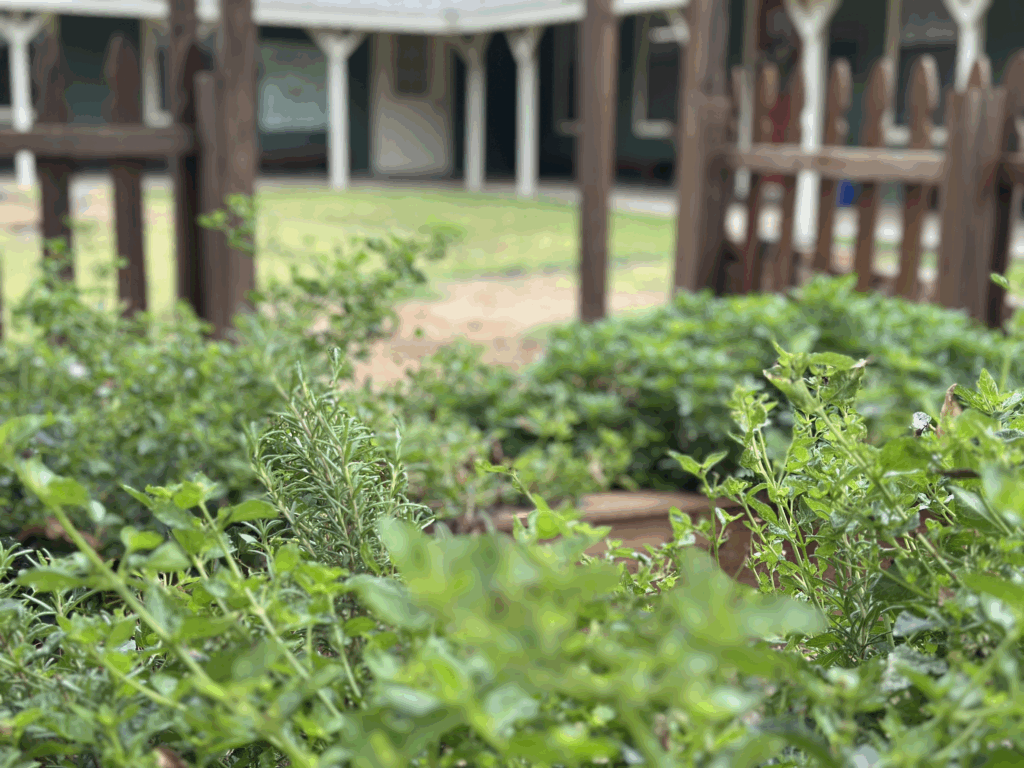
Montessori education places a strong emphasis on hands-on experiences and outdoor activities. Children are encouraged to explore gardens, observe animals, collect leaves, and participate in activities such as planting seeds or tending to classroom plants. These experiences are carefully designed opportunities for children to develop observation skills, practice patience, and learn about life cycles, ecology, and the interconnectedness of all living things.
Fostering Curiosity, Responsibility, and Stewardship
By engaging directly with nature, children’s natural curiosity is ignited. They learn to ask questions, make observations, and seek answers, thus building a foundation for scientific thinking and lifelong learning. Additionally, caring for plants and animals instills a sense of responsibility and empathy, teaching children that their actions have real-world consequences and that they are part of a much larger eco-system. This early environmental stewardship is a key goal of Montessori education, preparing children to be thoughtful, compassionate caretakers of the earth.
Long-Term Impacts on Development
The benefits of a strong connection to nature extend far beyond childhood:
Cognitive Growth: Nature-based learning supports problem-solving, creativity, and critical thinking by providing endless opportunities for exploration and discovery.
Emotional Well-Being: Time spent in natural environments is linked to reduced stress, increased calmness, and improved emotional regulation, helping children develop resilience and mindfulness.
Physical Health: Outdoor activities promote movement, coordination, and gross motor development, laying the groundwork for lifelong healthy habits.
Social Skills: Shared experiences in nature foster cooperation, communication, and empathy, as children work together to care for their environment and each other.
Rooted in Montessori Principles
The Montessori method focus on nature is not incidental because it is woven into the fabric of its educational philosophy. By respecting the child’s innate love for the outdoor world and providing daily opportunities to nurture that bond, Montessori education helps children develop a profound sense of belonging, wonder, and responsibility that endures into adulthood. In a world where the disconnect from nature is growing, the Montessori approach offers a powerful reminder: fostering a connection to nature is essential not only for healthy development but also for cultivating the next generation of environmental stewards and compassionate citizens.
References:
- https://www.colmontessori.com/the-importance-of-nature-in-montessori
- https://www.springstonekids.com/six-principles-montessori-prepared-environment-explained/
- https://montessori-chantilly.com/blog/the-role-of-nature-in-montessori-education/
- https://montessoriacademy.com.au/montessori-education/principles-of-montessori-education/
- https://www.huntingtonmontessori.com/post/montessori-and-nature-exploring-environmental-education
- https://www.projectmontessori.com/pages/cultivating-a-love-for-nature-montessori-environmental-education
- https://www.aiu.edu/blog/nurturing-natures-explorers-montessori-pedagogy-and-a-childs-bond-with-the-natural-world/
- https://montessoriacademysharonsprings.com/learning-nature/